Sometimes you just need to express your feelings, especially when the entire planet seems chock full of pervs and nincompoops.
Stories of military atrocities, gropey yogis, how shocked we all are not about Michael Jackson and the new foot-in-mouth disease in Japan may anger us beyond all get-out (trigger warning on all those links). Sobriety may surface all our jagged, buried rage. Or the helpless checker who can never (ever) weigh our zucchini without flailing for managerial help may just make us want to punch the checkout lane's bags of Bugles into orange clouds of puff. Stifling these feelings is not the right thing to do.
But neither is throwing our flatscreens into the pool, filling our tubs with Jack, or swatting said helpless checker upside the head with squash. We need effective, healthy, harmless release.
Seven Anger Management Tools for the What-In-The-What? Weary
If you've not yet learned to vent anger without ending up on "Cops" or you've never admitted to feeling angry once in thirty-six years (or you just can't therapy-bat out the workaday stress with your gestapoey boss looming), behold these handy anger management tools. Each is tested and (mostly) free. And watching their therapeutic awkward just may trim some edges off your simmering fury until you can smashy-smashy-and-we're-breathing alone in your safe place. Enjoy! (And check out the special bonus at the end!)
1) The Dammit Doll. I wish I were this cute when I'm angry. (But I'm really really not.)
2) The silent primal scream. This may or may not be affiliated with "Kids in the Hall."
3) The pillow fight. Okay don't really do it this way though.
4) The mattress fight. You may need a shaggy friend for this.
5) Kickboxing. Try to have as much fun as these guys. They're really enjoying themselves.
6) The foam bat. Be careful!
7) Special bonus: Smashing dishes!
Showing posts with label video. Show all posts
Showing posts with label video. Show all posts
Friday, May 17, 2013

Wednesday, May 15, 2013
When life throws you landfills.
You ever look around your shambly room and all it's piles of garbage and laundry and spiderweb condominiums and feel burdened? Why can't things be cleaner? Why haven't we gotten a Roomba for Christmas yet? How can we be expected to fit in chores when we can barely handle stumbling out of bed at 8:45 a.m. to grope-crawl for our Abilify without having a panic attack?
Moments like this, when you're lying on the floor sobbing because you just didn't know it was garbage day until it was much too late, these moments call for gratitude.
I know I know. Shut up with the gratitude. But just give me a second.
Yes, recovery is very hard. You do sometimes cry in your car before meeting your boss, and silently strangle pillows in your closet before tucking in your kids, and miss bowling and dancing and fishing to spend hours resolving in front of strangers how your dad caught you stabbing a Ken doll when you were nine.
And yes, you probably did have had a very crappy life from which you now must recover. Aunt Betsy sat you on the stoop saying she'd return in an hour and didn't come back for fourteen years. Mom couldn't afford more than Icebreakers and cracker sandwiches for breakfast, lunch and dinner. And Grandpa celebrated your birthday by dispatching three jugs of stout and tearing down your dead grandmother's rose-print wallpaper.
This is all real and painful. No one should ever diminish what you're going through. But, sometimes, finding the joy buried under your legitimate pileup of pain can transform everything.
Take this everything-that-is-adorable-in-the-universe girl:
Now watch this video (seriously, watch it):
If these kids who live literally in piles of garbage can make Yo-Yo Ma's muse out of said crap, so can you.
Maybe you can't get up and mow your lawn or burn the dishes. And that's okay. But while you lie there on the floor, patiently waiting for your soul to heal, maybe notice that you too are kinda like these cuteness wunderkinds. Beneath all the junk life's thrown on you, there is your courage, resiliency and beauty, the stuff of which Mozart dreamed.
Moments like this, when you're lying on the floor sobbing because you just didn't know it was garbage day until it was much too late, these moments call for gratitude.
I know I know. Shut up with the gratitude. But just give me a second.
Yes, recovery is very hard. You do sometimes cry in your car before meeting your boss, and silently strangle pillows in your closet before tucking in your kids, and miss bowling and dancing and fishing to spend hours resolving in front of strangers how your dad caught you stabbing a Ken doll when you were nine.
And yes, you probably did have had a very crappy life from which you now must recover. Aunt Betsy sat you on the stoop saying she'd return in an hour and didn't come back for fourteen years. Mom couldn't afford more than Icebreakers and cracker sandwiches for breakfast, lunch and dinner. And Grandpa celebrated your birthday by dispatching three jugs of stout and tearing down your dead grandmother's rose-print wallpaper.
This is all real and painful. No one should ever diminish what you're going through. But, sometimes, finding the joy buried under your legitimate pileup of pain can transform everything.
Take this everything-that-is-adorable-in-the-universe girl:
 |
| Landfill Harmonic |
If these kids who live literally in piles of garbage can make Yo-Yo Ma's muse out of said crap, so can you.
Maybe you can't get up and mow your lawn or burn the dishes. And that's okay. But while you lie there on the floor, patiently waiting for your soul to heal, maybe notice that you too are kinda like these cuteness wunderkinds. Beneath all the junk life's thrown on you, there is your courage, resiliency and beauty, the stuff of which Mozart dreamed.
Tuesday, May 14, 2013
I believe I'm a bird.
Mistake: A) Slamming cheekwise into a freshly Windexed sliding door; B) Crashing your pimpmobile through the back wall of your sister's house (Note: Both A and B can be done sober, or otherwise); C) Failing to learn from A or B.

You ever watch Bob Ross? He may predate some of you youngins but for some of us Ents of the Eld he made our Saturday mornings. Rather than watching Power Rangers as they strobed their way with karate chops into our hypothalami, we sat with coco learning to paint endless permutations of the Grand Yukon and discovering there within the great meaning of life:
Everything is possible with practice. And there are no mistakes, only happy accidents. (Dear galloping-moose-in-the-trees, we love you bearded Bobby, almost as much as our bespectacled angel of heaven.)
According to Ross, every painter's mistake is a unique piece of something unfinished and beautiful -- if used well. Word, hairy whitefro man. Word. For Ross, this was a meta-narrative about finding joy and peace in life. Painting was living. Living was like painting. Nothing is irredemable. It just has to be blended in towards the goal.
And we all sat drooly awed in our footy pjs, wondering just why his hair was quite so very round, yet getting the message deep in our hearts. So let's again let bearded Bobby instruct the rest of our morning, via this video.
Paint well, dear readers, live well.
Monday, May 13, 2013
Don't be Simon. Be Oprah: Survivor shame.
We accept all these rational absolutions of our guilt, in some hazy outer-region of our minds. But no absolution feels true. What feels true is this:

These extracts of rape survivors' personal shame and guilt come from Pandora's Project (a.k.a Pandy's), a resource site for rape and sexual assault survivors. Their shares are posted to show their grievous commonality and promote empathetic connection between survivors. It's as if (and I'm just guessing here) all we trauma, assault and abuse survivors are so Hulk-with-the-shirt-busting enraged about our injuries that we even hate ourselves for feeling them. We'd each gladly be rid of ourselves just to revenge ourselves on the pain we contain. Worse, we feel resonantly alone. We are too weak, too guilty, too bad to be heard. If someone knew what we'd allowed, and how we felt about it now, they'd flail backwards in disgust, throwing books and armchairs to pad their escape. They'd hate us. And their hate would confirm our self-loathing. We couldn't bare it.
But hearing that someone endured what we did, and felt as we do, makes it all seem less terrible. Seeing these people like us embraced with love, at least by someone, also mitigates our fears. Broaching our pain becomes more possible because of their example, less like a nightmare that drags us naked on our fat day to bawl "I Am Beautiful" in front of Simon Cowell off his meds, and more like a scary but doable risk.
Shame researcher Dr. Brené Brown calls this kind of empathetic, vulnerable connection the antidote to shame (if you want, skip to 2:55 for the point. Hi Oprah.):
Unfortunately, much of the time, people aren't helpful. (Don't even get me started.) Also posted on Pandy's is an excerpt from After Silence: Rape and My Journey Back that discusses how others (like, perhaps, masses everywhere) so often fail survivors (or, say, bulldoze them like Roger Rabbit under Christopher Lloyd's psychopathic glee). Also exploring this is Gift From Within, a nonprofit serving PTSD sufferers:
Effectively, survivors think something like, "Okay, even if I couldn't Arnold-sword-hack that guy off of me, or rabidly bite through dad's wrecking-ball arms, or dispel mom's mania with a tidal flood of love, at least I should stop hurting now. I should be strong now. I should be smarter, braver, better now. And everyone agrees. See how they react. They and I think this is all my fault. I wish I were dead." (Queue violent sobbing and funnel-in-throat pour of favorite drug.)
We don't deserve this. But we don't believe that. Not yet. Not without much strong, smart, brave self-love.
Wednesday, May 8, 2013
Ohio rape case special: Zombie warfare.
The news attacks with another story of kidnapping, imprisonment and rape, and our buried nightmares reanimate like zombies that will chase us bloodthirstily for a week.
First we're numb. We try to not click the news links and we palm back the zombies' lowering faces without looking. We mute the news-flashes that cut through our pretense that nothing exists in the universe besides Bruno Tonioli's hyperbolic frenzy for foxtrot, and we look straight ahead as the zombies murmur, "braains," in our ears. We dodge whispered conversations, hearing only snatches of, "It's so awful, so unbelievable. Wouldn't someone know?" and we duck into bathrooms feeling queasy, with the zombies behind us pointing back to the fading words.
By the end of the day we're twitchy. The night seems darker. The zombies trail us as we walk, seeming to move closer. Then closer.
By the end of the night we're shrieking in the tub like Janet Leigh clutching her shower curtain while dozens of zombies of all shapes and sizes pile on us to infect our brains with panoramic terror.
The world is a trigger bomb. Is there any escape?
Yes, there is.
Escape route, step one: You want to scream at those whispering people by the water cooler, "Yes these things happen! No, for the love of Albert freaking Einstein, it is not 'unbelievable'!" (strangles imaginary air-neck) "And yes, yes!, dear merciful death from above!, someone probably did know!" And then you'd kick over the whole 1982-ish Crystal Springs mechanism with a big sploosh!
This is okay. This is not wrong. Your residual trauma-related anger may be triggered and trying to work it's way out. Feel free to fantasize about various splooshings for at least a good half an hour. Maybe buy one of these. Or be like this brilliant child:
This may help you avoid actually kicking anyone in the head. That's really the main point of step one.
Escape route, step two: Your trauma memories spring from your pores like you're a Wes Craven Chia Pet and you're sort of choke-drowning in grief for those three Ohio women like one of those CGI extras in Titanic.
This is also okay. Remember, you were a victim too. Deep trauma leaves scars. And empathy is a virtue (even if it makes you like Leonardo DiCaprio who can't get on the door sometimes). You wouldn't ask those poor women in Ohio not to cry. Don't ask it of you. You can create a safe space to vent your feelings without doing harm to you or others (see brilliant child again).
Also know that (brace yourself) most enabling bystanders are scared too. Feel free to air-punch me from wherever you are for saying this. "Enablers are vampire-daemons from the Place Beyond Doom. They allow our hurt." Yes. True. But sometimes it's helpful to notice motives. Inside anyone who may have seen any strange perversity in that Ohio house, and overlooked it, is probably just another broken person who fears the truth. This could also be true for those who overlooked you. Accepting big hard truth is a feat of strength. If you can accept truth, and those around you can't, know this means you're stronger than them, and try to have mercy.
Somewhere around this daunting feeling is the general aim of step two.
Escape route, step three: Do good with your pain. Don't let the perpetrators win by turning you into them. Don't hurt others because it will make you feel better. And maybe, if you feel strong enough, use your experience to help others. Walk back up to that water cooler (after a hearty wail-out on your car's back seat) and engage them. Tell them that one out of every four women, and four out of every one hundred men, is molested or raped at least once in their lifetime. Maybe hand them this terrifying RAINN stat sheet (perhaps emphasize the last two sections):


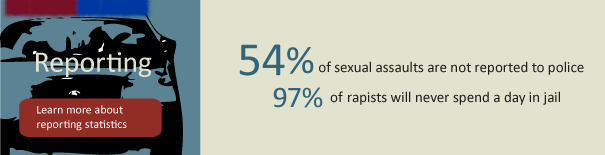
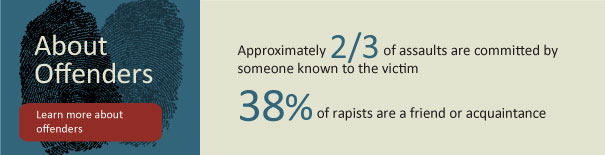
If the water-hoarders walk away even slightly more informed, congratulations. You've completed step three.
Then after all of that, if you've processed the kindling-bundles of rage, fear and shame, passed through uninformed, water-starved masses everywhere, and come out the next morning okay with yourself, knowing you survived, you know truth and you do good with it, then be proud. Rick Grimes has nothing on you.
Tuesday, May 7, 2013
When Buck Rogers misses the train. How to die addicted.
Thank the Lord Almighty for death. Nothing kicks addiction faster than killing yourself with it.
When we were addicted, we thought maybe we could manage it. We laid on our bathroom floor chatting with Puff the Magic Dragon about how to break the window bars off our parents' house to get more cash. We double-fisted cocktails while teetering off a Reno curb and calculating how long we could extend our trip and still make our Monday meeting. We chain-swallowed from a Costco flat while scrolling the web for work-from-home that could let us binge all day. But then, if we were lucky, management failed. Puff turned on us and magically made our frontal cranium seem to cave in. We were hit by a taxi. A diabetically withered artery behind our eye burst.
The lights went out. We saw God (or Not God). And then we awoke. Terrified.
Fear of death is one of the few fears stronger than fear of losing our drug. Hear some Word about this from addict-come-interventionist Kristina Wandzilak:
(Disclaimer: Just for right now we refrain from endorsing Wandzilak's Discovery Health channel show, Addicted, because, while tele-interventioning is sometimes handy scare therapy, other times it's sorta Tammy-Faye-with-all-the-eyelashes telecommunications that amounts to sick-sploitation. And we can't swear either way about Addicted. Maybe you can. Regardless, Wandzilak seems like a lovely lovely person, hence her inclusion in the blog.)
What Wandzilak says here about "jumping off points" is truth: addicts almost always must smash kinda face-first into their craggy, seashore-during-a-hurricane bottoms to recover. You basically have to realize you're going to die if you don't stop killing yourself. Genius, I know.
This brilliant insight doesn't always come chugging at us via literal, personal near-death experiences (with the wriggling lady tied down to the tracks, helplessly shrieking, "Help me Buck Rogers!"). Take the transfiguration of former heroin-chic model Jamie King, who got long-term heroin addiction recovery after her boyfriend had a drug-related death. It can come floating down on a sunny walk when we see an elderly couple and realize we may not live that long. Or when we lose our job and know we're headed for the street. Or even when we read some annoying blog that won't shut up about topics we hate because deep down inside, we're scared.
It only takes anything that convinces us there's more risk to keeping our drug than losing it. Lacking that epiphany, the best recovery tool is the grave.
Sunday, May 5, 2013
Our beautiful neighbors.
When you were scared and alone that time, I bet no one saved you. Maybe someone came later, someone kind who told you they would save you, build you a rocket ship and fly you to the moon. But then they left. And you were alone and scared again.
This lingers. These childhood feelings of isolation, abandonment and threat, they stick. They sink in, pool and stain. We stay scared. We keep feeling alone and helpless. Especially when we confront scary people today.
We're at the mall with a frenemy who bosses us around, feeling our dead abuser's hands tighten around our neck, and we snap at the slow cashier. We present before our grouchy boss while our mental loudspeaker crackles out the daily rollback on our worth, and our addiction itches.
We're trying to grow up into big, strong people who can push back and detach from scary others without hurting us or them. But we aren't there yet. Today, our "voices of truth" are stuttered grunts or scream-cries blurted out in half-fragments followed by inarticulate heaves. We lash out in preemptive emotional nuke strikes or we run away, curl into hidden balls behind chairs, hoping some big white knight will save us. But no white knight trots in.
Except for Mr. Rogers.
What? Well, he is white after all. And he does have a castle. Just watch this video....
If only he were our parents. Sigh.
Mr Rogers made this video when America recovered from 9/11. This bespectacled angel of heaven wanted to soothe our nerves and help us believe we could still look forward with hope, rather than just look back in fear, after the worst national tragedy. His message matters. Still. Today, for everyone.
Especially for we've who've suffered the worst personal tragedies.
This message matters because, first, it reminds us there are Mr. Rogers in the world. Not everyone is that grandmother who locked us in the back room for crying after being hit, nor that guy who punched us in the gut, or did worse, in the shadows of the high school bleachers.
There are plaid-tie-wearing, fake-piano-playing, walking founts of adorably safe-huggable love everywhere. Sometimes even in the people we fear.
Second, it reminds us that all these beatific Fred McFeelys (I heart you Mr. Rogers, I heart you so hard), they believe in us. They think we're good. They're proud of us, even when it seems to us that all our attempted bravery, maturity and grace end up as pretty much awkward failblog trampoline jumps into the shrubbery. They support us when we can't.
And last it matters because he's talking right to you, the little kid shrouded in a fumbly, shrieking adult body, petrified beyond-all-get-out of the harm-sharks about to bite. And scared even more of your own helpless capacity to fail. He's speaking truth.
The past's tragedies don't define you. You have grown up (at least partly). You will "do all you can" to protect your kids (especially, ahemhem, you). You'll learn to voice truth with graceful health. And you are no longer alone.
Friday, May 3, 2013
Forgiveness for when you need it.
It's not your fault, your addiction. Yelling at your kids while high, selling yourself for hit money, the Ziplock taped to the underside of your desk, it's not your fault. Getting your kids drunk, cheating on your spouse in a haze, driving drunk everyday for a year, that wasn't your fault. When you ate food from from the garbage, stole money for a binge, smelt like vomit at school, you weren't guilty.
You are not bad.
And the consequences, the scars, disfigured face, liver disease and diabetes, your wounded children, estranged exes and disappointed parents. You did it. But you are not ruined.
Addiction is devouring. It is a mental superhighway with no exits and no road signs and on which you can travel two hundred miles before even realizing you got on.
Telling you yet again that addiction is a disease and all the subsequent blah-dee-blah about neurochemicals and reward patterns may not convince you you're forgiven, even though that blah-dee-blah is true.
And though you may still hope that all you really need is just to hear that one answer you want so much, to that one question you're afraid to ask of those people you love and hurt so badly, their forgiveness may not work either.
You have to forgive you. But this is crazy talk. Yeah, I'll just squeeze that muscle.
Take this super-hopeful video from the awesome YouTube SobrietyTelevision channel as inspiration:
You can decide not to hate you anymore. You can. It will be hard. It will often suck with discomfort. The whole process will often crap out. But you can. Under every tar asphalt of addiction, behind every heroin dealer, black-out drunk and obese sugar addict, is a just another soul. No monsters. Souls that are sick, and lost, not evil. This includes you (imagine a visual Smokey the Bear point here for emphasis).
Believing this may be too hard. And if it is, that's okay. Because even if you never feel it or believe it, underneath that disbelief will still be a soul that is not at fault, not bad, and never ruined.
Saturday, April 27, 2013
If a victim cries in the forest.
In heaven there is a pastel air-continent where warm enswaddling blankets, soothing lullaby-like (but not Kenny G-like) music, and soft tear-soothing hands descend automatically around you when you enter. This is where you go when you've been assaulted, and admitted it, only to be disbelieved.
Denial is a cruel thing. Like medieval torture. It can often hurt as much as the assault denied.
Because deniers at least (sometimes) start off really seeming like "good people" with "values." Every time you walk around the darn corner just to buy your toothpaste you get blunderbussed by one of them, wearing a sweater vest and a smile, with Gotye Almighty instructions to forgive and forget. And who hates forgiveness, right? (Cause me, I loathe Ghandi. And Martin Luther King, Jr. Ya'll suck, you, you heroes you.) But when these generally admirable people say, "I don't believe you. That couldn't have happened," it's kinda soul-crushing.
And you know there's actually a soul-crushing process built into your lower cranium? (It's like the opposite of an emotional can-opener):
Step 1) Part of you immediately takes the noble deniers' word and retracts inward to inquisition all your pain, asking, "You got that angry? They said it's not that big a deal. You believed this happened? They said he would never do that. He loves me. What's wrong with you?"
Step 2) At the, "What's wrong with you?" stage, the question becomes a statement. And the statement gouges into your being.
Step 3) Conceding you're wrong, you start remorsefully mentally packing up all your now unacceptable hurt and outrage.
Step 4) You condense all that down with the garbage compactor of your mind into these tight little cubes of shame and fear that are magnetized to your soul for the rest of your life.
Step 5) These slowly accumulate more of themselves over time like stalagmites.
Step 6) You live on the dirty floor and can barely move or breathe.
Luckily, knowledge is power. And freedom. Just ask Frederick Douglas.
You can unclinch yourself from the vice-like grip of disbelief with deep knowledge that denial is a reaction to trauma. Hearing that a husband, son, friend (or, sigh, favorite football player) is a pedophile, wife-beater, car-jacker or terrorist is kind of a traumatic experience (except for the football player part; that's just stupid). Alright it's not like getting hit in the face with a bus, but the spontaneous demolition of (or severe injury to) a primal love can wound anyone as deep as a stab to the kidney. Just take the pitiable, grief-stricken musings of Zubeidat Tsarnaev:
While it's probably bad karma to pry too deep into her mindset (and all charges against her son are still, technically, allegations), her sad story is a good example of a prevalent problem: People will actually fail to believe what hurts too much to believe.
This sucks. But if seen clearly, it reveals that denial is not about your truth. And that's the wonderful truth.
Disbelief does not disprove the crimes denied. Nor shrivel the veracity of accusers. No one really thinks those pressure cookers were shooting red crayons.
While trauma-reaction denial does not cover all the myriad miserable ways that disbelievers let survivors down and kick us around, it does often inspire the most decades-of-therapy-and-maybe-even-a-vodoo-doll-or-two-worthy rejections. Like those from Mom, or Aunt Martha or your little brother.
Even if the entire world claims you're lying (or, at best, have False Memory Syndrome), your truth is your truth. And someone in heaven sees it.
Wednesday, April 24, 2013
Climbing out of a dumpster. Tips and tricks.
Sitting on a bed in an inpatient clinic, watching an orange sun set through unbreakable plastic windows, listening to chair-throwing, guard-running, alarm-heralded patient rages through which your heavily sedated roommate sleeps dozily can give one an inflated sense of competence.
You can feel as though you've got it together, if, say, you can read a September 2006 copy of House Beautiful with fervently earnest interest while others around you stumble half-dosed with Zoloft looking for the nearest exit port, and others more weep over the grilled cheeses accidentally served for breakfast. You can think, "Yeah, I've got this mental health thing down."
But you don't really. And you know it, deep down, in the place that still hurts.
It's really scary to admit you're stuck, broken and need help. Especially when you've seen how impotent, shattered and helpless people can be (like, for instance, when they're being strapped to a padded bed because they felt too strongly about the distance of the nearest bathroom). You don't want to be like that, so you don't want to admit there's a part of you that kind of is.
But that's how you get stuck in dumpsters. Let me explain...
You can't climb out of the dumpster you're in if you won't admit you're in it (and, speaking as one who has many a time thrown out my substance-of-choice with zealous, recuperative dispatch only to find myself fifteen minutes later sifting through the drippy, pestilential dregs of said dumper to restore my forsaken Precious, this is truth). And even if you admit you need a way out, you won't get out easily if you refuse to admit you need help (you know, those moments when you think, "Sure, this coat hanger will make a super escape ladder." No, it really, really won't.)
Take this cutsey-poots video making the rounds on the interwebs as an illustration:
Who doesn't love bears, right? And what Gilgameshian ego can withstand the acidic burn of such vociferous cuteness long enough to reject grasping even one little stray bear-hair of wisdom from their awesomely MacGyvery escape? The mama bear sat around all night worrying and hoping they'd escape. And though they caterwauled and rambled around all night in their junk, they couldn't do it alone. Not until someone dropped in a ladder. And they used it.
What's great about this is that the rescuers here just leave the ladder. They don't dive in and get mauled trying to lift the cubs out. They don't knock the dumpster over with their Dallasey truck, maybe freeing but probably disjointing some wee baby bear parts. And they don't call in Animal Rescue to have everyone tranqued and drug away dreaming of pastrami wrappers. They just drop the ladder. The bears figure the rest out themselves.
That's what it's like, recovery. You need a ladder. And, often, you need someone to drop one. But then, the rest is up to you.
Subscribe to:
Posts (Atom)