 |
| Best Counseling Degrees |
Showing posts with label mental illness. Show all posts
Showing posts with label mental illness. Show all posts
Tuesday, June 24, 2014
Sanity through Infographic: At least it's not an icepick up the nose.
When the meetings, meds and all that catharting get tired, remember it could be worse. Like, drowned in a lake to see if you'll float worse. Because crazy is *magic!* (Poof! With sparkles.) ~ The Curator

Thursday, February 20, 2014
Being Present: Someday The Screaming Will End
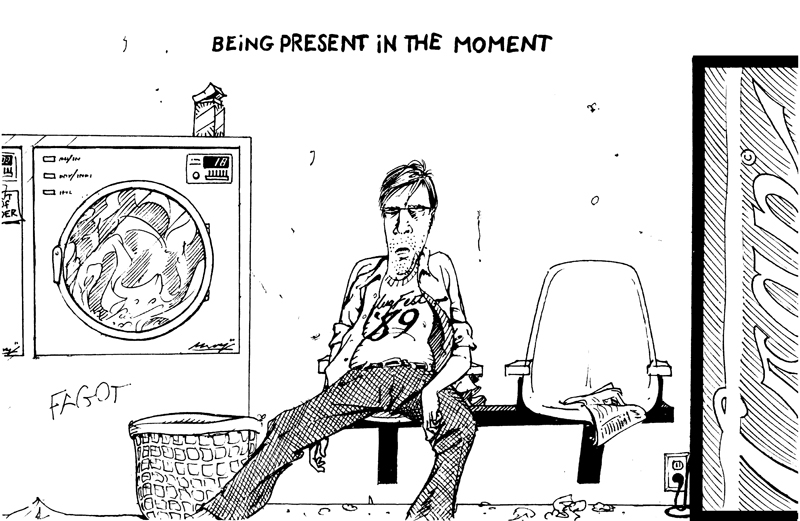 |
| "Being Present In The Moment". The Pain. |
Mode two: You try desperately to stay anchored to your sense of self and the now, feeling your breath, and focusing hard on your totem. But try as you might, you're blown out of your skin with your totem shattered to smithereens by a nuclear mushroom cloud of grief or rage that balloons inside you with infinite, unceasing energy. The memories and thoughts won't stop. After a max of ten minutes, you numb out and find yourself six hours later on your fourth pint of ice cream, your fifth bottle of Sky, your third bag of weed, your last working credit card, or fifth consecutive hour of Bioshock. You've missed a whole day of life. Because being absent felt better than being present. This is the more common option.
It sucks. When it's like this, you feel trapped. All you want is escape. You pray for freedom with desperation and shimmery puppy-dog eyes like that little girl at Christmas who just reeeaaallly wants that horse. You can feel hopeless, like your only choices are conscious torment, unconscious torture, or death. Many of us like choice three. If we ever chose it, we are grateful to have survived.
When being present is hard (splintery, shard-in-the-eye misery) like this, it's helpful (sometimes) to remember why being present matters. It's not just about noticing butterflies and bumblebees, and prancing like some blissed-out Snow White so la-dee-frickin-da happy to be alive. That's stupid. It's about finding your way out. Ending the torment.
Think of being present like holding the Maurader's Map. (Harry Potter fans, explain this.) When you pause and notice what's happening, all the paths appear. You can trace your own mental windings and dead-ends, you can follow your mental traffic. You learn your way around. You find the doors leading out.
But if you force it, crumple your map, pour Vodka or chocolate all over the paper or feed the sheet into your PS3 or bong, you ain't gonna find nothing. It stays blank (and probably silently laughs at you in some magical map kind of way, like a snarky Sorting Hat).
"Escape" through addiction or dissociation is a lie. All those blurry hours may feel like bliss, like freedom from life boiled in your own skin, but they actually trap you, simmering forever. Those silky voices luring you seductively back to your purple haze are really the voice of that skanky dealer offering you that "one last hit" from his track-marked hand. "It's just to get you over the edge so you can come down and get clean," the voice may say. And "Yeah, you can trust him," you may think. Then three weeks later you're back in the alley selling your flesh for one more hit.
Addiction, dissociation and avoidance keep you lost. They steal your map. They leave you no way out. So you're stuck there, forever. (Like Argus Filch. And who wants to be that guy?)
The only real way out is through the fire. Even when it's cat-scalding, coffee-spill-blister painful. Even when for yet another morning you have to sob-scream your way out of bed just to be able to tie your tie without strangling yourself to death.
You can get through. You can feel the feelings, think the thoughts, and get to the end of them. Every tunnel has its exit. If you just keep your eyes open and aimed at the light.
Sunday, August 4, 2013
Mental Obsessions with Mortal Enemies

And we're back from a long hiatus. Sorry about that folks. I'll try not to let it happen again.
Anyhoo, you ever find yourself obsessing endlessly about someone you dread? For example, you spend hours a day anticipating how so-and-so will soon cut you open with words, trample your boundaries, rip apart your dreams, and generally leave you a crumpled, tear-soggy, helpless mass on the floor. And you ceaselessly imagine yourself confronting whoever-they-are with irrefutable proof of their many crimes and truly decrepit moral state. And in this fantasy you always picture that your just conviction crumples their soul (just a little) and (even better) changes them so that they will never try to hurt you again.
But then you never actually do say anything -- or if you do it's a self-recriminating pre-apology for your inappropriately hurt feelings or a spasmodic scream-cry of hyperbolic rage that leaves you in the wrong. You never get your point across. You never feel better. Your relationship with dreaded so-and-so never changes. And so you obsess on and on.
This behavior is a like a twisted inverse of that phrase, "hope for the best, prepare for the worst." Instead, you're obsessing about the worst and preparing for nothing.
So what's the solution? Well, the fist step is realizing that the obsession is probably causing you much more misery than whoever-they-are probably ever could. Just think about it. How many hours a day or week or month do actually spend in so-and-so's company? And of that time, how much is actually spent receiving hurts from so-and-so, or having your boundaries crossed by them, or being subject to whatever they do that drives you up the wall? Then compare that time to how many hours a day or week a month you spend obsessing about whoever-they-are and what they've done or could do next. Think how you feel in midst of the obsession, how twisted up you are with your hurt, resentment, shame, and fear. Odds are, reality is far less painful than your preoccupation with it.
And if it hits you that your obsession, not whomever you're obsessing about, is the primary source of your pain, you will be motivated and empowered to end both.
And that's the trick: realizing what you do have power over. Because the sad truth is, even if you did muster up the courage to confront so-and-so in a reasonable and matter-of-fact way, and did say everything you wanted to say in exactly the way you wanted to say it, you're not going to change them. You have no power over them.
People have to want to change themselves. And not everyone has 12 Step Programs. Not everyone has therapy. Not all have the willingness or capacity to change.
So if our fantasies of freedom from pain hinge entirely on someone else changing their behaviors, we will likely be left miserably dependent on something that will probably never be, and forever suffering.
We have to realize that only we have power over us. Only we can change. The so-and-sos ain't gonna. So if we're afraid that the so-and-sos will rip our souls apart with vitriol or violation the next time they come around, we can consider our real options: 1) we don't have to let them around, or 2) if they do come around and start attacking or imposing, we can say, "Stop. I don't let anyone speak to/treat me that way," or something of the like. If, after that, they keep attacking or imposing, we can leave or escort them to the door.
"And how on God's green earth and we supposed to do that?!?" you may ask. To some such direct self-care sounds like super-feats the likes of which will only be seen in the next Superman-Batman team-up. There might as well be a "kapoww!!" caption over our heads when we do it, it's that likely to happen.
Yes, self-care is hard. Terrifying. But it's better than helplessness. Or endless miserable desperation. Plus, you can practice!
You can visualize what you'd say and what you'd do the next time self-care is called for. You can practice, mentally, saying the right words, responding to so-and-so in a way that makes you feel healthy and safe. And the more you mentally practice, the easier actually practicing self-care will be. No kidding. They say athletes who can't train due to injury maintain and even improve their performance by visualizing their moves over and over again. Their minds actually train for action through visualization of action. You can do the same.
Try releasing obsessive fear and anger and embracing self-responsibility and care. The worst that could happen is you'd have something else to do besides angst powerlessly about doom.
Wednesday, June 5, 2013
When you don't heal. Trauma Tiger 3.
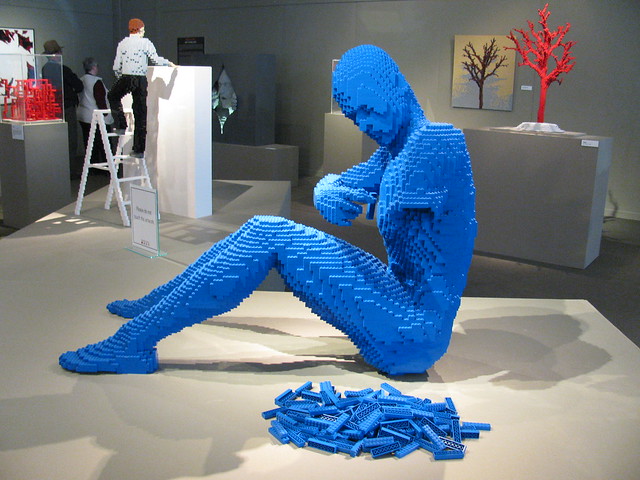 |
| "Putting yourself back together again." KanrieAnn |
We may even be told we can't expect to feel better. All we can have is management of constant pain. In despair, we think, "Is recovery worth this? My drug really was my only comfort." Then we cruise up to our favorite bar, drive-through or pharmacy, and just look. Yearning.
But healing and freedom, they exist. The trick is knowing where to find them. (They're not in those bags, bottles and cans.) Often, they lurk behind our unresolved trauma.
I know some of you may think, with your eyes all asquint, "Trauma? I've never been traumatized. Other people are beaten, raped, have survived war or car accidents. I'm just a normal addict," or, "I've just got your run-of-the-mill dysfunction." Well, maybe.
But traumatic events are not merely happenings like, for instance, an asteroid crashing into your back patio as Bruce Willis shoots off your pinky toes while fighting radioactive snake monsters from space. Trauma really isn't an "event" at all. It's a condition. A state of being, potentially caused by any deep hurt.
In Waking the Tiger (see this and this for background), trauma psychologist Peter Levine explains it:
"The official definition [of ] trauma is that it is caused by a stressful occurrence 'that is outside the range of usual human experience, and that would be markedly distressing to almost anyone.' . . . This description is somewhat useful as a starting point, but it is also vague and misleading. Who can say what is 'outside the range of usual human experience', or 'markedly distressing to almost anyone'?"Some of us have been raped, shot, overdosed. We can look back to an event and say, "This is what happened. This is why I hurt." But others of us just don't know what's with us. We've never seen ourselves as "traumatized," but for a while we've felt off. Some mysterious cloud of hurt chases us. And we have tried hard to get over it. We worked our Steps, shared it in therapy, wrote letters we then burned or sent flying skyward on balloons. But still, the hurt stays. We still feel scared, angry, sad. Stuck.
These are signs of trauma. According to Levine, traumatized people can have widely various experiences that cause their injury. Surgeries, falls, the sudden loss of a parent, child or spouse, the disastrous injury of a dear friend. Anything that triggers your primal trauma response will do. The unifying thing is the symptoms:
"traumatized people. . . are unable to overcome the anxiety of their experience. They remain overwhelmed by the event, defeated and terrified. . . . Unresolved trauma can keep us excessively cautious and inhibited, or lead us around in ever-tightening circles of dangerous reenactment, victimization, and unwise exposure to danger. We become the perpetual victims or therapy clients. Trauma can destroy the quality of our relationships and distort sexual experiences. . . . The effects of trauma can be pervasive and global or they can be subtle and elusive."And that's the big giveaway. Subtly or globally, we feel overwhelmed, unable to overcome. Traumatized.
Healing starts when you can accept that, if you are traumatized, your feelings are "physiological as well as psychological." Your pain, fear, sadness and anger, they aren't shortcomings. They're wounds, even if you don't know what caused them, like the inexplicable bruises and scrapes that appear on your shins somehow. And you heal them, partly, in the same way. Hear Levine:
"we all have the innate capacity to heal our traumas. . . . trauma represents animal instincts gone awry. When harnessed, these instincts can be used by the conscious mind to transform traumatic symptoms into a state of well-being."You wouldn't pick at those seemingly spontaneous bruises and cuts, slapping them around as signs of your malignant self-pity. You'd bandage them, allowing your body to heal. Similarly the best way not to heal trauma is to try to disgorge it, blaming yourself for a "pity party" and refusing to "wallow." (If this old timer's experience is worth one nugget of truth, it's that that ain't going to work.)
What works is admitting your trauma, aiding it with as much TLC as you can muster, and helping your mind relearn health. You may need some new forms of professional assistance. But you wouldn't decline the ER in favor of an everyday band-aid if you sawed off a finger, so it's probably unwise to deprive a metaphorically bleeding brain, right?
And then, one day, if you feel better, and along the way you recalled something like, "Oh yeah, I guess that one time my grandfather did punch me in the face," or, "I guess Mom did drive away and never come back," you'll know you were never a weepy masochistic. Your hurt was never your fault. And instead of punishing it with more pain, you helped.
Sunday, May 26, 2013
Mental illness: Laughter in Crazytown.

Mental illness can feel like being trapped in the movie "Labyrinth." You swear you're walking straight ahead on an undeviating path. You look at the walls around you and they seem flat, sturdy and sound. Every once and a while you stop and talk to some sentient rodent who seems, while unusual, reasonable enough. Sometimes you take their queues on the way you should go. But then if you could see yourself from above, you'd know you were swirling around in an endless corkscrew of constantly shuffling walls and talking to mischievous sock-puppets operated by your own imagination.
The worst is the confusion. In your paranoia you absolutely believe, without any shadow of doubt, that klutzy barista Sharon throws scalding lobs of mocha at you in an attempt to make you feel shame. In spasms of post traumatic stress, you are entirely convinced with histrionic certainty that your assigned work shadow Brian is really orchestrating a plot to get you alone and assault you. Your disassociation invisibly splits your mind into raucous versions of "Crossfire" in which you and another you both attest with equal sincerity that you really are a Republican traditionalist who just wants to go to work, and you are also an anarchist hippie twitching to chuck all your things in a van and move to Venice Beach tonight. Then you wake up the next morning sleeping in the van in the kmart parking lot curled up on a pile of fifty cent stuffed animals and you have no idea why. (It's not as fun as it sounds.)
And don't even get me started on the medication. There are pills that give you a "safety net" but replace the whispering voices of sinister evil with a constant ringing in your ears that makes you want to bust your ear drums with booming Rastafari just to get some peace. Then there are the pills that temper your highs but make you feel like some rubberized prisoner in that moment when Ben Stein drones "Beuler. . . Beuler. . . Beuler. . . " and you can barely move your legs to escape because every part of you feels like it's swimming in lukewarm pudding. And then there are the pills that make you slightly less convinced that everyone you know wants to kill you, but simultaneously make you gain forty-two pounds and have untoward "leakage" that none of those previously murderous friends can ever discover.
Sometimes you feel your only choices are a disease that is a whirligig of interminably conflicting inputs and swings through bliss, terror and despair, and a recovery that is a parched desert of grey-tone faces, muffled voices, dulled sensations and drowsily stumbling thoughts.
Plus, without your disease, in recovery, you can feel completely un-anchored. You may have been convinced that the voice in your head, who told you your place in the mystical architecture was eternal, penitent punishment, was God's. If that voice disappears, does God vanish too? Maybe you never lived one day not impelled through frenetic busywork by mania. How do you fill your hours once you're calm?
And who do you connect with? It's not like you can just go up to the guy in the lunch room and say, "Gosh you know, sometimes it is just so hard to stop crying in the morning in time to get ready for work, right?" 'Cause it's not like he'll, perchance, just back away slowly and maybe pull the fire alarm or anything.
You feel isolated. Like it's just you, and your disease, alone on a wide grassy plain with nothing else but crickets. It's scary.
But you're not alone. A recent article showcasing three people who got better from severe schizophrenia and depression highlights that, to stay well, they:
Have fun. And connect with others.
Often, we who bear mild to extreme crazies feel as though anyone who might discover our inner Wonderland would go running screaming into the night. We can also feel excessive shame. Sometimes the only people who feel safe are those suffering like us. And there are few more healing remedies than laughing with someone about that time you taped the windows shut against night daemons, and how it's not as funny as when they nailed the door closed to keep the giants out.
Just listen to these guys:
"It is one of the blessings of old friends that you can afford to be stupid with them." ~ Ralph Waldo Emerson
"Through humor, you can soften some of the worst blows that life delivers. And once you find laughter, no matter how painful your situation might be, you can survive it." ~ Bill Cosby
"No mind is thoroughly well organized that is deficient in a sense of humor." ~ Samuel Taylor Coleridge
Some of the most ill of us are wiser, stronger and braver than the sanest of the curmudgeoney sane. Despite our struggles and brain-kinks, we can sometimes offer more to each other and the world than could someone who's survived less. And we gain huge relief from our illness when we can treat it like some cross-breed of David Bowie and a Boggart. (Just picture that for a second. Dita Von Teese? Anyone?) Our disease may never leave us. But its weight upon us and power over us will decrease significantly if we can laugh it out with friends.
Monday, May 20, 2013
Addiction gypsies steal your brain.
 |
| The addiction gypsies sneak up behind the focused, recovering addict. The Victoria & Albert Museum |
A recovered alcoholic can spend years vigilantly guarding herself from booze, only to learn she has diabetes because of secret, frequent chocolate binges. A recovered heroin addict could dedicate his life to helping other users get clean, but live miserably tangled in an obsessive search for the perfect emotional and sexual mate. A recovered compulsive overeater may finally reach her goal weight, and celebrate by adding another grand to the fifty thousand in debt she's accumulated since getting abstinent. They could all focus so much on avoiding their addictive substance, they forget to pay attention to their addictive personalities and leave themselves open to being mugged of health and peace.
Too often addicts win recovery over their main addictions only to have their lives torn down again by new ones. It's comfortable, as an addict, to almost blame the substances for our addictions, as if the substances were containers of a disease that has nothing, really, to do with us. We want to think, "It's the alcohol, the drug, the sugar, the porn. It reacts in my body and mind. Without it, I'm fine." We think if we just avoid it, the rest of our lives will handle themselves. But this is a half-truth.
Too often addicts win recovery over their main addictions only to have their lives torn down again by new ones. It's comfortable, as an addict, to almost blame the substances for our addictions, as if the substances were containers of a disease that has nothing, really, to do with us. We want to think, "It's the alcohol, the drug, the sugar, the porn. It reacts in my body and mind. Without it, I'm fine." We think if we just avoid it, the rest of our lives will handle themselves. But this is a half-truth.
Drugs, alcohol and addictive foods do stimulate neurochemicals that create addiction. Addictive behaviors, places and thoughts also activate neuropathways leading sometimes inevitably back to addiction. But many addicts also have the ability to look at our drugs and behaviors across a span of recovery -- knowing deeply that they cost us spouses, children, careers and health -- and still think, "That would be so good."
That's us. Not it.
Before we pick them up, addictive substances and behaviors have no magic magnetism. They are not the Borg, drawing us toward themselves with tractor beams against which all resistance is futile. They're a can. A bottle. A needle. A pill. A box. A bag. An image. A room. They're nothing. That's why they're so easy to swap for something else.
What draws us into addiction, before we pick up, is what we're using it for. What emptiness it's filling. Ex: We have no self-esteem. Gambling's easy potential for victory was our drug. We gave it up, but still every time we lose a girlfriend we feel our self-worth grind into a fine powder. We can't live without her. Or: We never felt loved. Food comforted us like nothing else. We gave up binging, but still we obsess into tears over our pets and kids, sacrificing romantic, social and personal time to make sure they love us. We can't live without knowing they care.
We're dependent. We're hooked. We're still addicted, on new drugs now. The risk of this is, what happens to us when our new drugs leave? When she dumps you again? When your pet dies? When your kids go to college and forget you exist? Is it back to web poker and the junk food isle? Or is it endless revisions of your eHarmony profile, two new dogs and bi-monthly vacays to the kid's new school? And then what? What if eHarmony's a fail, you can't afford the vet bills and your kids tell you to get out of their life? Where are you in all of this?
Withdrawal. That's where. A hard, brutal one, fueled by every year, month, day and hour spent dependent on your drugs. Old and new.
Real self-care and recovery is a tough but worthy challenge to keep one eye on each side of the healing game. We have to drop our primary drugs, avoiding all their Fagin-ey tricks. We also have to watch ourselves, keeping our inner addictive urchins from sneaking up on our backs, and ideally parenting them with enough love and attention to reform them into abstentious little Oliver Twists.
If we don't do both, we risk someday really needing our recovery, reaching in to get it, and finding it gone.
Tuesday, May 14, 2013

Saturday, May 11, 2013
A diamond is a cracked stone.
 |
| IBC |
Are you over? Ruined? Not necessarily. Not with some minor readjustment.
"Minor" you say? Yeah, fine. My brain can't compute, so instead of going back to engineering I'll just sweep garbage shoots. My liver will burst, so rather than learning to run I'll lie floorwise waiting to die and studying the ceiling popcorn's Rorschach mystery. I'll never have kids, so I'll turn my apartment into a rescue farm and make all my dresses out of Purina sacks.
No, readjustment is not easy. But it is possible. And it leads to a more fulfilling life than despair.
Some things we can't change. Some wounds we can't heal. Some people we can't get back. No matter how sincerely you limber it up in yoga, nurture your organic turnips, cry it out in therapy, or make amends, sometimes Humpty Dumpty cannot be taped up. And refusing to accept it only creates new cracks.
Example: Your daughter won't see you. You could chase her down, visit her place of work, show up at her house unannounced. You could plead with her to see how sick you were, how you didn't mean anything you did. You could even fight, saying she's cruel. She rejects your amends, doesn't see her part. This probably won't go well.
Rather than snuggling your daughter into your warm embrace, you may just chase her deeper into shadow. What might be only a short time apart could become, because you fought it, one that may last years. Or forever. Your refusal to accept the loss magnified it. You created the pain you feared.
And this is basically how it goes.
You may have injured your brain. And you could fight it. You could go on interview after interview trying to prove it isn't so. And this may work out. If it does, wonderful. But it may not, and in the attempt you may erode your self-worth. Meanwhile you could have accepted your injury. Instead of fighting, you could have found new value. You might have helped somebody, coached kids after school, cared for an elderly friend. Your unexpected, unwanted life could have been more powerful than decades at a desk.
And so your liver's wounded. Again you could fight, keep on as if everything's unchanged. And this may prove a miracle. But it could also be your death. Alternatively, you might reap more years in admitting the disease, treatment and care, and meanwhile fill every hour of every day with joy as if each were a bubble about to burst so should be savored while it lingers. You could condense more life into a month than some might fit in decades.
And no, maybe, you can't have kids. And yes you can keep fighting, suffering through every test, believing it can be changed. And if this works, what a joy. But if you could accept your loss, you might find new purpose, and someone new, who needs you, to love and serve.
Your brokenness may be an opportunity for extraordinary meaning. Your dream of an unbroken life may awaken to a deeper life with infinitely more impact.
Friday, May 10, 2013
Slipping: There's no such thing as fairy dust.

We all know that place. Where we teeter on the edge of the decision. To cut ourselves. Call that dealer. Drink that beer. Go back to that website. Eat that cake. It would be like sliding off a cliff. All you'd do is drift one foot leftward, and you're falling all the way down.
And at the edge you believe you're weightless. You feel no gravity, see no horizon, no earth far below. No consequences. The choice seems so easy. Restraint is so hard.
When you're trying to stay clean it can feel like you have two warring selves. One you floats at this cliff in a bliss-bubble. The other you stands outside the bubble screaming and pounding on its crystal surface like you're Dustin Hoffman trying to stop the apocalypse. You want to scramble after whatever cord powers your suspension of sanity and yank it hard with a zeeoowww that would send your other self hurtling, informed, onto the safe high ground.
But you can't. You stay stuck outside, watching helplessly as the floating you drags you both over the edge, with a blissed-out smile on its face.
Weirdly this is a learned skill.
Pain rolled over us once. To survive, we may have whipped out a mental pop-up tent into which no pain or fear could enter. We hid inside. Left reality. Dissociated.
In Coping with Trauma-Related Dissociation, psychotherapists Suzette Boon, Kathy Steele and Onno van der Hart describe some physical aspects of this strange dissociation:
"There may be times when you feel spacey, foggy, or fuzzy. You may lose a firm connection with the present without being aware of it, and only realize afterwards that you were not very present. . . . You may have times when you are aware of your actions, as though you are watching yourself, but do not feel you have control over them."They also describe dissociation's result from trauma:
"If we consider a continuum of trauma-related disorders, with post-traumatic stress disorder (PTSD) being the most basic, and developing in the aftermath of a traumatizing incident at any age, then complex dissociative disorders are a more pervasive developmental accommodation to trauma...."Trauma hits. You're shocked and scared. You hide. You fly around like Peter Pan in Wendy's sheet-bunker for hours. You try to come out, but when you do you're hit with overwhelming fear, shame and anger. So you hide more. You fly around for months, maybe years. And every time you try to emerge, "smack!" Overwhelming pain. So you never come out. And in time your hideout expands like a glowy ethereal Blob, no longer shielding only trauma but blocking every unwanted feeling or thought.
Meanwhile all that fear, shame and anger sits alone on the outside, waiting for you to come back. But you never do. And while you expand your hideout, the earth between you cracks. And the crack spreads into a cliff-edged canyon, with your two selves stuck on opposite sides, miles apart.
And then one day you find yourself all grown up (or trying to be), with that fearful, shameful, angry self boasting a 12 Step program (or two or three), and fighting hard to stay clean. But frickin Peter Pan on the other side of the canyon won't stop leaning over the edge.
So what do you do? What Peter did. Sew your fearful, shameful, angry shadow back on. And refuse to fly away.
We'll check in with Coping with Trauma-Related Dissociation again to talk about how.
Monday, May 6, 2013
B-movie villains can't bite.
 |
| by Belathee Photography |
So there is this monster that keeps attacking you. It's this four-armed, four-legged, two-headed blob of a sorta-human with two voices and four eyes each looking crazily at you from different directions. It wobbles toward you and reels back, screeching like Skylla, waving all it's arms, scaring the bumblebees out of your craptrap.
This is the person who triggers you.
He or she is this freakish conglomeration of their generally humdrum self and your worst nightmare. Flouncy Nancy in the print dress has your demeaning step-mom's face growing out of her neck. Jittery Frank in the hipster bolo has your child-molesting uncle's hirsuted arms flapping out of his coat sleeves. Nancy says, "Hi Bob," and you hear a caterwauling mixture of that and, "You ugly bastard! Nobody wants you!" Frank calls, "S'up Diana," and you get a squealing, reverbed, "You little slut."
And usually you can't escape them. Nancy's your cube mate. Frank's your best friend's boyfriend. You're trapped. Your first impulse is to run, quit your job and dump your friend. But then your new boss is billowy Barbara with your step-mom's eyes staring out her forehead, and your sister gets engaged to chubby Charles with your uncle's drawl coming out a hole in his throat.
The monsters keep attacking. Because they live in our heads.
Hear me out. Admitting our "trigger-monsters" aren't real is one of the scariest, hardest, most humbling recovery tasks. And one of the most healing.
It's hard because trigger-monsters feel real. We feel really attacked, just like we did back then when we were traumatized, abused, neglected, overdosed, raped. We feel cornered, demeaned and alone. Admitting the monsters' unreality feels like admitting the trauma was myth too. We feel blamed for our hurt by any implication that the triggers spring from the still-wounded crevaces of our minds. The suggestion makes us want to Bruce Lee somebody's skull.
But the admission is also healing because it de-merges the past and present, at least a little. It's like moving a projector beam off the person blocking the screen. If you can accept that Nancy's over here, in the present, and your step-mom's face is over there, in your memory, the movie of your step-mom's screams may stop playing at you from Nancy's talking face. If you can allow that Frank just sits over there in that goofy hammock chair, and your uncle's gross arms died twelve years ago, the action sequence of your uncle's attacks could stop running in 3D surround sound. The traumatic memories may cease grabbing at you from an undulating phantasmagoria. They'll still exist. But at least Nancy will be just Nancy. Step-mom recedes back to 2D. Frank's just frank. Uncle fades to black and white.
If the new perspective reveals Nancy as, truly, a triggeringly terrible nag, and Frank as a flirty sleaze, at least you can now deal with them as just them, and no longer space-monsters from planet Hades. And while step-mom and uncle will never be your favorite memories, their mind-daemon claws cut far less deeply from across the reach of the past.
Saturday, May 4, 2013
The banshees can't steal your floor.
 |
| Drawing by Kim Schrag, from Unbound Art, Embracing Life |
Your mental banshees decide today's no ceasefire day, so instead of greeting you with their usual DMZ kabuki of non-hostile animosity, they fly around your skull rafters, toppling your cognitive filing cabinets and triggering your parasympathetic fire alarms. You can't get comfortable. You feel angsty for no reason. Your muscles tense. You want to scratch your skin off, and dear-pistachio-and-peanut-farmers-everywhere your spouse better not give you any dubious looks for a good hour and a half.
These mornings are hard. They can set everything askew, making any attempts at peace and serenity turbulent.
One good trick for diffusing these crackling lightning storms of "I hate you wool fibers, get the Frederic Fekkai off me" irritation is grounding to your felt sense of self.
"Grounding" is standard practice in somatic therapy. The goal of grounding is to find inner sensory resources and distance from overwhelming stimulus. The "felt sense of self" is a "pre-verbal sense of 'something'" (thank you Wikipedia) comprising you, an "inner knowledge or awareness" of your whole being. It is "experienced in the body" and is "not the same as an emotion." The quick and dirty is, grounding in your felt sense of self can improve your feeling of calm, stability, boundary and strength.
So let's give it a whirl. (Curse you mind-banshees, curse you to Customer Service at T.J.Maxx.)
Grounding to the Felt Sense of Self
(Note: If you suffer from severe PTSD or similarly overwhelming disorders, it may be best to attempt this only in the company of a trusted professional.)
1) Sit in a comfortable chair in a safe place with your feet flat on the ground.
2) Notice the floor beneath your feet. Notice it supporting you. Scrub your feet around if you need. Notice any comfortable, supportive feeling associated with your awareness of the floor.
3) Notice the sensation of the chair supporting you. Feel the fabric or material. Find any comfortable, supporting feeling associated with your awareness of the chair.
4) Notice any other comfortable sensations in your body. Focus on them. Are your knee muscles relaxed? Notice that. Does your chest feel open? Focus on that.
5) Try to expand these feelings of awareness all over your body. If you feel any physical or emotional discomfort, return your focus to the comfortable parts of your body (the supportive floor, those loose knees, that open chest) and keep your focus there. Try to expand the feeling again until you can do so without predominant discomfort. (It's okay if you can't do this comfortably. If you can't, allow yourself just to notice where you are comfortable.)
6) Try to expand this feeling all over you, including your parts beyond your body, like your mind and your soul, etc.
7) Rest in this awareness until an all-encompassing feeling of your "sense of self" forms in your mind and body. Rest in that as long as you want.
And you're done.
If not, then God help us all.
Wednesday, May 1, 2013
Trauma Tiger: Part Two. The bully with the breastplate on.

Shame is like armor. And not that invincible spider-thread Kevlar kind of armor that could take an infrared missile to the chest and keep going. We're talking medieval armor, made out of lead, that's hot, hard-edged and heavy. It weighs you down. You try to trot around on your horse fending off invading enemies, but you just jangle crazily like your bangle-wearing grandmother driving a tank through a construction site. And your horse looks up at you with that "Dear Mother of Mercy why?" look only horses can have.
Shame tells you it's protective. It's realism. It's clear-eyed acceptance of the sad, inevitable truth. Acceptance that will keep you ready for doom, so you're prepared. But shame is really fear. Fear pretending it's not, like that biggish kid at school who cries when his father yells at him so beats up everyone else at lunch. He's afraid to admit he's afraid, but he can't just poof! his fears away the way he wants, so instead he protests that all his fears aren't fear at all, but truth. And then he smacks you around with this "honesty": You are not afraid that you're bad. You are bad. You are not afraid of why you've been hurt. You deserve it. You are not afraid of why you've failed. You're a looser. You are not afraid of why your parents treat you the way they do. You are worthless.
Shame is fear of fear, and it cements your fears into your worldview. This kind of fear that mutates into these twisted craggy Slip-'n-Slides of self-disgust often stems from trauma, from entrenched addictions that frazzle our neural receptors, or from mental illnesses that can warp our perspectives like some cosmic string theory event.
Shame is fear of fear, and it cements your fears into your worldview. This kind of fear that mutates into these twisted craggy Slip-'n-Slides of self-disgust often stems from trauma, from entrenched addictions that frazzle our neural receptors, or from mental illnesses that can warp our perspectives like some cosmic string theory event.
In Waking the Tiger: Healing Trauma (see Trauma Tiger: Part One for kicks), Peter Levine offers a good metaphor:
"When confronted with a life-threatening situation, our rational brains may become confused and override our instinctive impulses.... [It's] similar to what occurs in your car if you floor the accelerator and stomp on the brake simultaneously. The difference between the inner racing of the nervous system (engine) and the outer immobility (brake) of the body creates a forceful turbulence inside the body similar to a tornado."
Addiction and mental illness are pretty much the same. Years of active addiction can reprogram the brain into thinking it's essentially gone without water for a week and a half when the abused substance is withdrawn. Addiction can also tangle emotional responses into hyper-sensitive feedback loops that spout upward into traumatically tumultuous torrents of anger or ecstasy before crashing into deep waves of depression or apathy. Likewise mental illnesses can trick sufferers into thinking they're on the brink of death every day.
The sad part is we're actually supposed to feel this way, kinda. Hear me out. Hypothetically we should be allowing ourselves to break down into these sobby panic-stricken states of universe-ending terror, so the energy creating them can flow out of our systems. This is the "not stomping on the brake" part of the process. But we have a really hard time doing this in a way that releases control. Queue Levine:
"Many war veterans and victims of rape know this scenario only too well. They may spend months or even years talking about their experiences, reliving them, expressing their anger, fear, and sorrow, but without passing through the primitive 'immobility responses' and releasing the traumatic residual energy, they will often remain stuck in the traumatic maze and continue to experience distress."Basically, even if we want to work through it, we want to do it with our talking, reasoning, big-kid helmets on. And if perchance we let ourselves slip over the edge into the quaking vulnerability quivering under our shielding, we get self-judgy. Al la Levine, we "tend to judge this instinctive surrender in the face of overwhelming threat as a weakness tantamount to cowardice."
And there's your shame. Fear of fear. The armor that keeps you pinned to the floor under a hot iron plate of histrionic self-loathing. And underneath it all is an adorably biggish kid who just needs to collapse.
Friday, April 26, 2013
Trauma Tiger: Part One
One of the most evil phrases ever spoken is, "Just let it go."
This erudite (and helpful!) instruction is often issued pushily by those who've never actually been gripped by the said "it" the letting go of which they propose. These pushers aren't trying to be evil (usually). They just sincerely think their experience of, say, not getting their dream first car, translates easily into your experience of being raped when you were five, or of being barfed on by your black-out drunk mom, or of being beaten with a dictionary for your whorish interest in Party of Five.
"You just have to get over these things," they might say from across the table, while you secretly shred the napkin in your lap into tiny, dismembered threads. And weep inside.
And they don't know that their (however-unintentional) suggestion that you are at least partly at fault for your pain (such suggestions are embedded at the slimy cores of all "let it go" nuggets) spirals you into compulsive fantasies of how you might feasibly get away with hitting this helpful friend in the head with a baseball bat without any baristas noticing, or hours of scream-crying just to avoid actually acting on the violent urge.
They think their gripe equates your trauma. But it doesn't. And neither does "normie" healing equate trauma recovery.
A normie coping strategy can often be easy peasy, accomplished by saying something like, "Oh well, I guess I should focus on happier things," and followed up with a bit of retail therapy (I love Home Depot as much as the next hipster).
Trauma healing, on the other hand, is typically a scosche more complex, often featuring desperate, strung out struggles to just not geyser out random spasms of unspecified rage at the grocery store, or not shrivel up into black, cavernous hair-cloaks of self-loathing at work.
One of the best books (IMO) ever written on the unique nature of trauma healing is Peter Levine's Waking the Tiger: Healing Trauma.

In his prologue, he underscores what differentiates trauma from ordinary pains:
Even if you've never had a bruise or a scar (though many of us have), trauma is a physical injury, something like a blown circuit breaker, or fried surge protector, or over-heated hard-drive that won't shut down squirreled away in the nooks of your hypothalamus. Healing trauma is thus also a physical process.
So let us return for kicks to the untoward table of "just let it go" despair, and flip things: Your friend feels bad because he or she can't lose weight. Well, what does any sound-minded individual say, but, "Just let it go."
"What?" your friend asks, looking all askance at your scategorical response.
"What?" you say in reply. "Have more will power. Just let it go."
Yeah. Because will power incinerates fat internally. Just ask Susan Powter.
Assuming that fat can be evaporated at will from the lovely love-handles we all accumulate (because vegan peanut butter brownies are that nom), is as logical and kind as assuming trauma can be processed the same way. If ever anyone suggests to you that you are somehow at fault for not "letting go" hard enough ("squeeze it dammit!" they may scream), know it's not your fault. Know it's a process. A process that, ironically, just has to be let go.
This erudite (and helpful!) instruction is often issued pushily by those who've never actually been gripped by the said "it" the letting go of which they propose. These pushers aren't trying to be evil (usually). They just sincerely think their experience of, say, not getting their dream first car, translates easily into your experience of being raped when you were five, or of being barfed on by your black-out drunk mom, or of being beaten with a dictionary for your whorish interest in Party of Five.
"You just have to get over these things," they might say from across the table, while you secretly shred the napkin in your lap into tiny, dismembered threads. And weep inside.
And they don't know that their (however-unintentional) suggestion that you are at least partly at fault for your pain (such suggestions are embedded at the slimy cores of all "let it go" nuggets) spirals you into compulsive fantasies of how you might feasibly get away with hitting this helpful friend in the head with a baseball bat without any baristas noticing, or hours of scream-crying just to avoid actually acting on the violent urge.
They think their gripe equates your trauma. But it doesn't. And neither does "normie" healing equate trauma recovery.
A normie coping strategy can often be easy peasy, accomplished by saying something like, "Oh well, I guess I should focus on happier things," and followed up with a bit of retail therapy (I love Home Depot as much as the next hipster).
Trauma healing, on the other hand, is typically a scosche more complex, often featuring desperate, strung out struggles to just not geyser out random spasms of unspecified rage at the grocery store, or not shrivel up into black, cavernous hair-cloaks of self-loathing at work.
One of the best books (IMO) ever written on the unique nature of trauma healing is Peter Levine's Waking the Tiger: Healing Trauma.

In his prologue, he underscores what differentiates trauma from ordinary pains:
"...the body reacts profoundly in trauma. It tenses in readiness, braces in fear, and freezes and collapses in helpless terror. When the mind's protective reaction to overwhelm returns to normal, the body's response is also meant to normalize after the event. When this restorative process is thwarted, the effects of trauma become fixated and the person becomes traumatized."Notice, he says here twice the body. Not the brain. Not the character. Basically, he's saying trauma is a not a head game. Healing trauma is not a mental decision. Failing to recover or recovering slowly is not a moral failing, or a sign of obstinacy. Trauma can not be disgorged at will.
Even if you've never had a bruise or a scar (though many of us have), trauma is a physical injury, something like a blown circuit breaker, or fried surge protector, or over-heated hard-drive that won't shut down squirreled away in the nooks of your hypothalamus. Healing trauma is thus also a physical process.
So let us return for kicks to the untoward table of "just let it go" despair, and flip things: Your friend feels bad because he or she can't lose weight. Well, what does any sound-minded individual say, but, "Just let it go."
"What?" your friend asks, looking all askance at your scategorical response.
"What?" you say in reply. "Have more will power. Just let it go."
Yeah. Because will power incinerates fat internally. Just ask Susan Powter.
Assuming that fat can be evaporated at will from the lovely love-handles we all accumulate (because vegan peanut butter brownies are that nom), is as logical and kind as assuming trauma can be processed the same way. If ever anyone suggests to you that you are somehow at fault for not "letting go" hard enough ("squeeze it dammit!" they may scream), know it's not your fault. Know it's a process. A process that, ironically, just has to be let go.
Thursday, April 25, 2013
Nanobots are cursed.
Craigslist can be an excellent way to clean out your juju.

Have you ever had that moment when you walk into a place (ex., your cube, your bedroom, your parent's house, your car, etc.) and all of a sudden it seems as though a squadron of nicknack shaped nanobots are on a covert spec-op to suffocate you to death?
"What's wrong?" your mother asks when you come for dinner. Oh nothing, just that lamp from alcoholic aunt Barbara. Just abusive Grampa's old watch. Only that picture of me and (insert name here) who got me drunk and dumped me after sleeping with my best friend.
"Are you okay?" asks your well-meaning but gossipy cube-mate. No, sure, I'm fine. It's just this pile of papers from that manager who screams at me, this email from the stalker in the copycenter, these running shoes I left here to self-motivate but haven't used in seventeen months (but which still manage to smell).
"Are you crazy?" you ask yourself when you walk in your front door, and your shoulders tense and you suddenly feel all barfy because your amygdala caught a glimpse of the mug you got on that binge trip to Tijuana eight years ago, or the blanket you used to cuddle in with your ex, or the coffee table you inherited from your pedophiliac uncle.
Humans create sacred spaces. Usually our sacred spaces are filled with objects. Objects with comforting, inspiring significance. Take this dreamy pic I snagged while creeping some random person's public Pinterest:

It's like living here would transform you into this super suave, Bond-ian person, who knows how to surf, and has an epic art collection, and is (still) a voracious bibliophile, and yet somehow makes orange shag carpet look like the most wondrous thing anyone could ever have.
However, the weekly trauma of Hoarders also proves we're awesome at creating unsacred places. We build swarmy nests cobwebbed with reminders of regret, anger and pain -- Or so clogged that the voluminous passels are injuries all their own (these pictures give me the heebyjeebies).
We have this habit of thinking something like this: "Her feelings will be hurt if I toss that Lisa Frank sweater she gave me in seventh grade," or, "What if he finds out I sold the necklace," or "I bought that car at my high. It doesn't matter what I did with it."
But it does matter. And it's her business if her feelings are hurt, not yours. And if you're scared of him, why would you keep something he gave you?
For some reason it's a crazy-high hurtle to surmount, believing you have the right to control and build your own space. To make it someplace that's good to you, and good for you. To believe you're allowed to remove what hurts.
This is especially hard if you've endured abuse. Because people who push you down make you believe you deserve it. They're just doing what's right. It's wrong of you to say no.
Life will never be painless. But we don't have to say, "Thanks, pain, that's so sweet," and then dust off pain's memento and put it on the mantlepiece.
We do have the right to cleanse, and create. And it is worth the effort. When the nanobots don't attack, all of a sudden you may feel safe. Maybe even, sacred.
~~~
Note: An awesome, hardly-used lamp and clock set is on sale on Craigslist now!
Monday, April 22, 2013
Infinite brain candy.
So Mondays right? Blech. Who's tired? This one, right here, for sure.
If you're at all like me (and you know you are; don't be frightened), some days suck more than others. You know the days I'm talking about. The ones where you want to curl up like a snail in your shell, shriveling oozily into warm dreams of rotting fruit (that's what snails eat), and hoping that if your fragile, snoozy carapace is crushed by busy life as it trundles over you, at least you'll dream right through it.
That's Mondays for some, I'm guessing.
Life's hard when you're recovering. When you struggle to cope with disease, addiction, trauma, loss and pain, your insides can feel like they're cracking open, all the time, everywhere. The base of your skull can throb like a pulsar. Your trapezius muscles can seem as if they're strangling you to death. And when this break, the brokenness inside you, bleeds out like this, it can take every ounce of will and courage just to breathe spasmodically yet consistently through the shuddering breach.
And you're supposed be someplace at 9 a.m.? With a suit on? And with prepared thoughts, about things no less, things irrelevant to anything seemingly consequent, such as "Where the hockey-puck is my Prozac?" and "Why the fudge-ripple-in-a-can must I jog down the block just to smoke?"
On days like this I cling with desperation to the wisdom of "Infinity." And no this is not some new yogi mantra... though it may already be an old one. This thought-provoking painting by Jerod Kytah is a good illustration:
I like this painting because it literally shows what is meant by "the wisdom of infinity" (I like to imagine this echoing in the voice of James Earl Jones). In each of us there is a part in the shadow and a part in the light. One part hurts, really bad. And another is okay, knowing everything will be all right.
Living successfully in recovery requires cycling through these parts. Like walking. One minute you're on your left foot. Next you're on your right. You don't get very far hopping along on one foot only. If you try, you could get numb-footed, half-atrophied and, eventually, bloody-nosed.
The same goes with life. You can't thrive only in the part that's "okay," tight-fistedly rejecting any hint of the more shadowy part (or, at best, assuming the shadowier part can fix itself just fine without any uncomfortable assistance from you). Nor can you thrive only in the dark. Perpetual, purgative catharsis is no good (believe me, I've tried). Just give pulling on flowers a whirl. No matter how well-intentioned your yanking, it aint going to make them bloom.
This is where brain candy comes in (mmm yum for serotonin). We have to wash our faces, do our jobs and meet the world with some semblance of self-sustainability. There's no getting around it, unless we are blessed with a complete, financial support system. On days when our spines crack with grief and woe, our shadowier sides have hard times of this. They need help -- help that does not come in the form of self-harm (a.k.a., insert your addiction of choice here). And what better help is there I ask you than web memes that make you smile?
Buzzfeed has this good one, but it's old. So queue this adorable article I StumbledUpon this morning, listing children's definitions of love. The last is my favorite:
Author and lecturer Leo Buscaglia once talked about a contest he was asked to judge. The purpose of the contest was to find the most caring child.
The winner was a four year old child whose next door neighbor was an elderly gentleman who had recently lost his wife.
Upon seeing the man cry, the little boy went into the old gentleman's yard, climbed onto his lap, and just sat there.
When his Mother asked what he had said to the neighbor, the little boy said,
"Nothing, I just helped him cry."
If you're at all like me (and you know you are; don't be frightened), some days suck more than others. You know the days I'm talking about. The ones where you want to curl up like a snail in your shell, shriveling oozily into warm dreams of rotting fruit (that's what snails eat), and hoping that if your fragile, snoozy carapace is crushed by busy life as it trundles over you, at least you'll dream right through it.
That's Mondays for some, I'm guessing.
Life's hard when you're recovering. When you struggle to cope with disease, addiction, trauma, loss and pain, your insides can feel like they're cracking open, all the time, everywhere. The base of your skull can throb like a pulsar. Your trapezius muscles can seem as if they're strangling you to death. And when this break, the brokenness inside you, bleeds out like this, it can take every ounce of will and courage just to breathe spasmodically yet consistently through the shuddering breach.
And you're supposed be someplace at 9 a.m.? With a suit on? And with prepared thoughts, about things no less, things irrelevant to anything seemingly consequent, such as "Where the hockey-puck is my Prozac?" and "Why the fudge-ripple-in-a-can must I jog down the block just to smoke?"
On days like this I cling with desperation to the wisdom of "Infinity." And no this is not some new yogi mantra... though it may already be an old one. This thought-provoking painting by Jerod Kytah is a good illustration:
 |
| Infinity, watercolor, by Jerod Kytah |
Living successfully in recovery requires cycling through these parts. Like walking. One minute you're on your left foot. Next you're on your right. You don't get very far hopping along on one foot only. If you try, you could get numb-footed, half-atrophied and, eventually, bloody-nosed.
The same goes with life. You can't thrive only in the part that's "okay," tight-fistedly rejecting any hint of the more shadowy part (or, at best, assuming the shadowier part can fix itself just fine without any uncomfortable assistance from you). Nor can you thrive only in the dark. Perpetual, purgative catharsis is no good (believe me, I've tried). Just give pulling on flowers a whirl. No matter how well-intentioned your yanking, it aint going to make them bloom.
This is where brain candy comes in (mmm yum for serotonin). We have to wash our faces, do our jobs and meet the world with some semblance of self-sustainability. There's no getting around it, unless we are blessed with a complete, financial support system. On days when our spines crack with grief and woe, our shadowier sides have hard times of this. They need help -- help that does not come in the form of self-harm (a.k.a., insert your addiction of choice here). And what better help is there I ask you than web memes that make you smile?
Buzzfeed has this good one, but it's old. So queue this adorable article I StumbledUpon this morning, listing children's definitions of love. The last is my favorite:
Author and lecturer Leo Buscaglia once talked about a contest he was asked to judge. The purpose of the contest was to find the most caring child.
The winner was a four year old child whose next door neighbor was an elderly gentleman who had recently lost his wife.
Upon seeing the man cry, the little boy went into the old gentleman's yard, climbed onto his lap, and just sat there.
When his Mother asked what he had said to the neighbor, the little boy said,
"Nothing, I just helped him cry."
Saturday, April 20, 2013
Weird gratitude for crazy people.
Note: Since this post was first published, all charges against the suspect in the Ricin letters case were dropped. References to the suspect have hence been revised to refer to whomever, it now appears, may have framed him. Stay un-cray cray people. ~ The Curator
So horrible things happened this week. And not just the big things we know about.
Boston was bombed. And shot at. And carjacked. And locked down. And bombed again. And shot at again. And then won.
Texas blew up. Someone in Mississippi wants to kill Washington with rancid beans.
And all the while, anyone with a mic or a phone or a Reddit account scrambled to sleuth out the answers and thereby confused the heck out of already enfrenzied masses everywhere. (And everyone with a blog blogs on.)
And yet, things like this happen in slow-motion everyday. Thousands of small tragedies were already happening and went on happening quietly in the background, while we all watched these big ones go down in aghast awe.
Silently, people were murdered. Houses burned down. Family members betrayed one another. They did last month, ten years ago and will tomorrow.
More likely than not, you've suffered a personal tragedy, a shocking loss, a shaming duplicity that wrecked your life. This week may have brought it all back. The events in Boston, Texas and Washington may have reminded you of your nightmares, your grief, your shame. They may have made you feel powerless, worthless, numb, hateful and sent you spinning. Or you may not have cared at all, and that may be a problem all it's own.
How do you react? When something terrible but distant (or, even, innocuous but somehow troubling) stirs up your worst inner pain and fear, what do you do with it? Do you numb out? Do you turn to your favorite addiction, diving into that Snickers or vodka or bong or lover with consoling gusto? Or do you get angry? Scream at the driver in front of you for his or her heartlessly insensitive road-hogging in the midst of national tragedy? Or mock your politicians for blatant corruption inviolable to the most urgent national need? Or blame the Muslims or Republicans in your area for consenting en mass with violence?
Or do you do good with it?
See, what I take away from weeks like this is, weirdly, gratitude. Gratitude, in a way, for those two sad brothers, and some disgruntled Mississippian. Let me explain....
I've known some severely crazy people. Even been one myself. And the crazy people I've known have done some very, very bad things. The kinds of things we could have easily heard about this week on the news.
Often, when these people splayed their harmful crazy before me, as the Tsarnaev brothers and whoever hates Elvis that much did before us all this week, I've felt deep in my bones one strong, reverberating terror: that could be me.
I have the capacity to hurt you. And I've used it. So do you. And so have you. Especially when we've both been kinked up in fear and pain.
We lash out, we humans. We beat each other down and blow each other up because we feel bad and we think that if we can make them hurt as much as we do, we'll feel better. Everything will be all right for us if only the bad people are gone.
But we never feel better. Everything is never all right. And so we lash out again. We keep trying and trying and trying to punish others into taking our pain away.
Until we stop. And often, it's only fear that stops us. Fear we'll end up just like those we hate. Fear we'll end up on the news.
Nothing can ever make up for the terrible losses suffered by so many this week. Nothing can ever put the pieces back exactly where they were before everything blew apart. Those who've lost limbs and loved ones in Boston and Texas are marked forever by evil and tragedy. So how can we honor them? How can we do anything to show that we feel what they've lost?
One way may be to feel gratitude for everyday, every moment, that we chose to be unlike the Tzarnaev's. We can be grateful every time we chose not to do harm with our pain.
So horrible things happened this week. And not just the big things we know about.
Boston was bombed. And shot at. And carjacked. And locked down. And bombed again. And shot at again. And then won.
Texas blew up. Someone in Mississippi wants to kill Washington with rancid beans.
And all the while, anyone with a mic or a phone or a Reddit account scrambled to sleuth out the answers and thereby confused the heck out of already enfrenzied masses everywhere. (And everyone with a blog blogs on.)
And yet, things like this happen in slow-motion everyday. Thousands of small tragedies were already happening and went on happening quietly in the background, while we all watched these big ones go down in aghast awe.
Silently, people were murdered. Houses burned down. Family members betrayed one another. They did last month, ten years ago and will tomorrow.
More likely than not, you've suffered a personal tragedy, a shocking loss, a shaming duplicity that wrecked your life. This week may have brought it all back. The events in Boston, Texas and Washington may have reminded you of your nightmares, your grief, your shame. They may have made you feel powerless, worthless, numb, hateful and sent you spinning. Or you may not have cared at all, and that may be a problem all it's own.
How do you react? When something terrible but distant (or, even, innocuous but somehow troubling) stirs up your worst inner pain and fear, what do you do with it? Do you numb out? Do you turn to your favorite addiction, diving into that Snickers or vodka or bong or lover with consoling gusto? Or do you get angry? Scream at the driver in front of you for his or her heartlessly insensitive road-hogging in the midst of national tragedy? Or mock your politicians for blatant corruption inviolable to the most urgent national need? Or blame the Muslims or Republicans in your area for consenting en mass with violence?
Or do you do good with it?
See, what I take away from weeks like this is, weirdly, gratitude. Gratitude, in a way, for those two sad brothers, and some disgruntled Mississippian. Let me explain....
I've known some severely crazy people. Even been one myself. And the crazy people I've known have done some very, very bad things. The kinds of things we could have easily heard about this week on the news.
Often, when these people splayed their harmful crazy before me, as the Tsarnaev brothers and whoever hates Elvis that much did before us all this week, I've felt deep in my bones one strong, reverberating terror: that could be me.
I have the capacity to hurt you. And I've used it. So do you. And so have you. Especially when we've both been kinked up in fear and pain.
We lash out, we humans. We beat each other down and blow each other up because we feel bad and we think that if we can make them hurt as much as we do, we'll feel better. Everything will be all right for us if only the bad people are gone.
But we never feel better. Everything is never all right. And so we lash out again. We keep trying and trying and trying to punish others into taking our pain away.
Until we stop. And often, it's only fear that stops us. Fear we'll end up just like those we hate. Fear we'll end up on the news.
Nothing can ever make up for the terrible losses suffered by so many this week. Nothing can ever put the pieces back exactly where they were before everything blew apart. Those who've lost limbs and loved ones in Boston and Texas are marked forever by evil and tragedy. So how can we honor them? How can we do anything to show that we feel what they've lost?
One way may be to feel gratitude for everyday, every moment, that we chose to be unlike the Tzarnaev's. We can be grateful every time we chose not to do harm with our pain.
Subscribe to:
Posts (Atom)