Showing posts with label addiction. Show all posts

Thursday, November 20, 2014

Loveburn

Collectors Quest

Love is transformative. It's beautiful and perfect. Like sunlight. It powers life. It brightens everything. It warms everything. It makes everything sparkle.

Just like sunlight, too much love can burn you.

When do you love someone too much? When you love them more than your needs, your need for friends and connections other than them, your need for emotional or financial stability, your need for safety and freedom from fear, your need for physical health. You love your kids too much when your life feels not worth living when they leave you. You love your spouse too much when you can't bear that they think anything bad about you, and you have to make them stop. You love your parents too much when you put their needs before your own or your kids'.

You love someone too much when you can't let them hurt, when you need to save them from everything, even if that means hurting and losing yourself.

You love someone too much when you can't think of anything but them. Birthdays remind you. Sundays reminds you. Grocery store aisles remind you. Movies, songs, books, pictures, colors, food, cups, necklaces, pants, carpet, sunlight, rain, snow, your calendar, what your boss said this morning, your neighbor's dog, your best friend's mom, the facebook newsfeed, the flower in the corner of the ad for return address mailing labels, everything, everywhere, always reminds you. Even when you close your eyes and all you hear is the sound of your own breath in the dark, even that reminds you.

You love someone too much when you can't forgive them for anything, because they hurt you that deeply, because you wanted that much for them to fill you up with themselves and their irreplaceable love, and they didn't. You love someone too much when you constantly expect them to change and refuse to except them and their behavior, for the same reason.

When you love someone too much, you use them, you depend on them, you need them. You can't and won't live without them, even if you wish you could and would.

That's loving someone too much.

And when you've loved someone too much so much that now your life is shriveled or even the briefest exposure burns and yet you'll stand there and soak them in, thinking, this is love, that's when you cannot love them. That's when you have to live without your light, your love, until the burn fades.


Tuesday, June 24, 2014

Sanity through Infographic: At least it's not an icepick up the nose.

When the meetings, meds and all that catharting get tired, remember it could be worse. Like, drowned in a lake to see if you'll float worse. Because crazy is *magic!* (Poof! With sparkles.) ~ The Curator

Best Counseling Degrees

Sunday, March 2, 2014

Being Used is the Kiss of Death

Histrionic Vampires. Albernstein.com

Imagine someone jumps you. Their jaws tighten around your coronary artery. You feel blood reroute from your brain to their maw. At first, you struggle and try to scream, but you can't shake them. So eventually you go limp and stop fighting. The light gets fuzzy and pink-tinged. A strange, tingly warmth creeps over you as you start to think that spilling your life down your attacker's gullet isn't so bad after all. Maybe it's your great calling. You feel altruistic, selfless and loving, as your world goes black. Enabling an emotional vampire goes just like this.

The term "emotional vampire" is trendy, a little cruel, and overly simplistic. Unfortunately, it's also accurate. Let's demonstrate.

Back up and imagine your saber-toothed jumper is your partner, parent, sibling or friend. Let's call him or her "Vamp." Now Vamp is (probably) someone you love, or at least can't get away from. Vamp is an important part of your life and has lots of wonderful qualities you value highly. However, Vamp also has some not so good behaviors....

For starters, usually, to Vamp everything is always about Vamp. It's your birthday? Vamp wants to celebrate with five hours of stories about Vamp's latest triumphs. You're getting married? Vamp is so happy because Vamp is in a relationship too.

It's also likely Vamp can't let you have anything Vamp doesn't. You get a new car? Vamp buys a new house. You get a new watch? Vamp thinks you're so vain. You're off to Europe? How could you travel while millions starve? At least Vamp puts Feed The Children first.

More importantly, Vamp typically breathes drama. Vamp knows their boss enacts a megalomaniacal plot. Vamp is sure their cramps are septic appendicitis. Vamp's abusive checker "forced" them to hysterics at customer service and "made" them drunk-type rant Target corporate.

Therefore Vamp's life is chaos. Vamp "has to" buy all new furniture because plaid suddenly gives Vamp nightmares. Jerks should stop being judgy about how Vamp's last three cat adoptions just didn't work out. Vamp couldn't not borrow $200 grand to launch Vamp's dream ceramics shop. It wasn't Vamp's fault it closed after a month. Customers were stalking Vamp.

Mired in constant chaos (and this is the key thing) Vamp needs you. Vamp relies on you to take Vamp to the ER at 3 a.m. for that crampy (non)appendicitis. Vamp depends on you to be there for Vamp's three-hour scream-cry about that megalomaniacal boss. Vamp will feel so abandoned if you don't help Vamp haul all Vamp's old, plaid stuff out.

Should you resist Vamp, set boundaries, or do anything possibly loosening Vamp's death-chomp on you, Vamp probably won't react well. You admit your girlfriend hints at marriage. Vamp melts down and harasses the girl for being a skanky slut. You say you can't rush over to check Vamp's "probably-fractured" spine because it's 2 a.m. and you have an 8 a.m. presentation. Vamp maligns you as a selfish non-friend. You get promoted to Manhattan. Vamp accidentally cancels your flight. Then Vamp "repays" you by driving you out, where Vamp wants to live together.

Vamp can't ever -- ever -- let you go. Because to Vamp, you are a human life preserver. You keep Vamp afloat in a constant emotional storm. Unfortunately this blood-sucking smooch drowns you both.

The injuries to you are obvious. Your birthday becomes a Vampalooza. Your trip to Europe is soured by Vamp's ire. You snap at your kids after Vamp's cry-a-thon leaves you weary. You're late to your presentation after assuring that, indeed, Vamp's back is fine. You have to pay double for a new flight to New York.

Vamp's injuries are subtler. Because Vamp is an addict, and Vamp's drug is you.

"Emotional vampires" are not evil people. They're hurt ones. They're often gravely-injured, one-step-from-The-Walking-Dead ones. And they may not know it. But you probably do. That's probably why you keep giving Vamp "one more chance."

You're not healing Vamp when you let Vamp use you. When you conceal your bite-marks with fake smiles and faker forgiveness. You're killing Vamp, with kindness.

When Vamp uses you to boost Vamp's mood, reassure Vamp's insecurities, reassemble Vamp's life or fend off Vamp's fall-out, Vamps stays sick. When you "make everything okay," as Vamp spins in Vamp's whirlpool world, the hole sucking Vamp's universe down gets bigger. Your relationship becomes like the jack in a crack-addict's arm. Every hit widens the wound. And no hit ever satiates the hunger.

No matter how much love, empathy, forgiveness or energy you pour into the heart of whomever drinks your psychic life dry, it will never be enough. You will never be enough. You will never fix them. They will never feel fixed. Suck and suck and suck and they will still thirst.

Only they can fix them. Only they can fill them. And they can only find, fix and fill themselves when you're out of the way, and they face the light.


Thursday, February 20, 2014

Being Present: Someday The Screaming Will End

Generally, I find there are two main modes of being present.
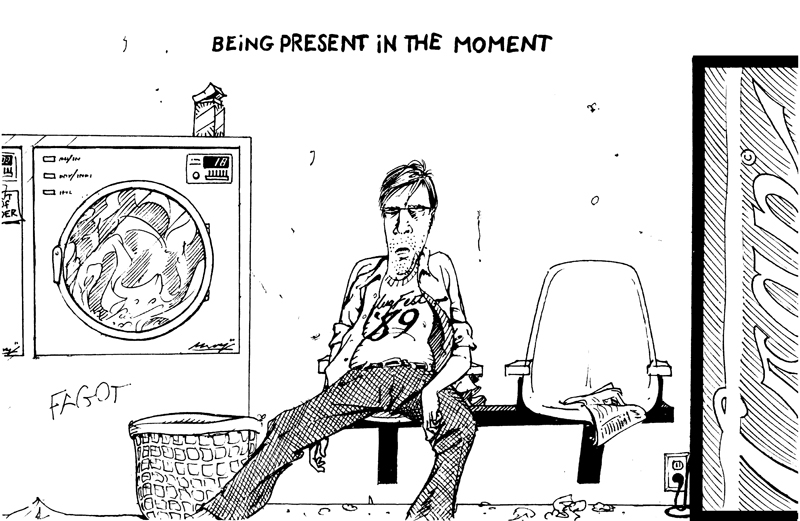
"Being Present In The Moment". The Pain.
Mode one: You wake up. You feel like crap-taffy. Your neck and lower back are all kinked up from stress that tormented half your brain with sleeplessness all night. Trying to recover, you give "noticing" the tension a whirl, and you burst into uncontrollable sobbing or a ten-minute pillow-scream before you can safely manage making coffee without scalding the cat. This is the more preferable mode.

Mode two: You try desperately to stay anchored to your sense of self and the now, feeling your breath, and focusing hard on your totem. But try as you might, you're blown out of your skin with your totem shattered to smithereens by a nuclear mushroom cloud of grief or rage that balloons inside you with infinite, unceasing energy. The memories and thoughts won't stop. After a max of ten minutes, you numb out and find yourself six hours later on your fourth pint of ice cream, your fifth bottle of Sky, your third bag of weed, your last working credit card, or fifth consecutive hour of Bioshock. You've missed a whole day of life. Because being absent felt better than being present. This is the more common option.

It sucks. When it's like this, you feel trapped. All you want is escape. You pray for freedom with desperation and shimmery puppy-dog eyes like that little girl at Christmas who just reeeaaallly wants that horse. You can feel hopeless, like your only choices are conscious torment, unconscious torture, or death. Many of us like choice three. If we ever chose it, we are grateful to have survived.

When being present is hard (splintery, shard-in-the-eye misery) like this, it's helpful (sometimes) to remember why being present matters. It's not just about noticing butterflies and bumblebees, and prancing like some blissed-out Snow White so la-dee-frickin-da happy to be alive. That's stupid. It's about finding your way out. Ending the torment.

Think of being present like holding the Maurader's Map. (Harry Potter fans, explain this.) When you pause and notice what's happening, all the paths appear. You can trace your own mental windings and dead-ends, you can follow your mental traffic. You learn your way around. You find the doors leading out.

But if you force it, crumple your map, pour Vodka or chocolate all over the paper or feed the sheet into your PS3 or bong, you ain't gonna find nothing. It stays blank (and probably silently laughs at you in some magical map kind of way, like a snarky Sorting Hat).

"Escape" through addiction or dissociation is a lie. All those blurry hours may feel like bliss, like freedom from life boiled in your own skin, but they actually trap you, simmering forever. Those silky voices luring you seductively back to your purple haze are really the voice of that skanky dealer offering you that "one last hit" from his track-marked hand. "It's just to get you over the edge so you can come down and get clean," the voice may say. And "Yeah, you can trust him," you may think. Then three weeks later you're back in the alley selling your flesh for one more hit.

Addiction, dissociation and avoidance keep you lost. They steal your map. They leave you no way out. So you're stuck there, forever. (Like Argus Filch. And who wants to be that guy?)

The only real way out is through the fire. Even when it's cat-scalding, coffee-spill-blister painful. Even when for yet another morning you have to sob-scream your way out of bed just to be able to tie your tie without strangling yourself to death.

You can get through. You can feel the feelings, think the thoughts, and get to the end of them. Every tunnel has its exit. If you just keep your eyes open and aimed at the light.

Wednesday, June 5, 2013

When you don't heal. Trauma Tiger 3.

"Putting yourself back together again." KanrieAnn
"What the crap?" we may ask ourselves when our emotional struggles persist. We go to meetings and therapy, we mediate and practice yoga, we eat only raw, vegan muesli, and consume libraries of self-help texts. But still, we're edgy and anxious, we snap at our mates and friends, we weep loudly over small hurts, and our addictions itch. Despite trying every wise and even sketchy recovery technique, we still don't feel better.

We may even be told we can't expect to feel better. All we can have is management of constant pain. In despair, we think, "Is recovery worth this? My drug really was my only comfort." Then we cruise up to our favorite bar, drive-through or pharmacy, and just look. Yearning.

But healing and freedom, they exist. The trick is knowing where to find them. (They're not in those bags, bottles and cans.) Often, they lurk behind our unresolved trauma.

I know some of you may think, with your eyes all asquint, "Trauma? I've never been traumatized. Other people are beaten, raped, have survived war or car accidents. I'm just a normal addict," or, "I've just got your run-of-the-mill dysfunction." Well, maybe.

But traumatic events are not merely happenings like, for instance, an asteroid crashing into your back patio as Bruce Willis shoots off your pinky toes while fighting radioactive snake monsters from space. Trauma really isn't an "event" at all. It's a condition. A state of being, potentially caused by any deep hurt.

In Waking the Tiger (see this and this for background), trauma psychologist Peter Levine explains it:
"The official definition [of ] trauma is that it is caused by a stressful occurrence 'that is outside the range of usual human experience, and that would be markedly distressing to almost anyone.' . . . This description is somewhat useful as a starting point, but it is also vague and misleading. Who can say what is 'outside the range of usual human experience', or 'markedly distressing to almost anyone'?" 
Some of us have been raped, shot, overdosed. We can look back to an event and say, "This is what happened. This is why I hurt." But others of us just don't know what's with us. We've never seen ourselves as "traumatized," but for a while we've felt off. Some mysterious cloud of hurt chases us. And we have tried hard to get over it. We worked our Steps, shared it in therapy, wrote letters we then burned or sent flying skyward on balloons. But still, the hurt stays. We still feel scared, angry, sad. Stuck.

These are signs of trauma. According to Levine, traumatized people can have widely various experiences that cause their injury. Surgeries, falls, the sudden loss of a parent, child or spouse, the disastrous injury of a dear friend. Anything that triggers your primal trauma response will do. The unifying thing is the symptoms:
"traumatized people. . .  are unable to overcome the anxiety of their experience. They remain overwhelmed by the event, defeated and terrified. . . . Unresolved trauma can keep us excessively cautious and inhibited, or lead us around in ever-tightening circles of dangerous reenactment, victimization, and unwise exposure to danger. We become the perpetual victims or therapy clients. Trauma can destroy the quality of our relationships and distort sexual experiences. . . . The effects of trauma can be pervasive and global or they can be subtle and elusive." 
And that's the big giveaway. Subtly or globally, we feel overwhelmed, unable to overcome. Traumatized.

Healing starts when you can accept that, if you are traumatized, your feelings are "physiological as well as psychological." Your pain, fear, sadness and anger, they aren't shortcomings. They're wounds, even if you don't know what caused them, like the inexplicable bruises and scrapes that appear on your shins somehow. And you heal them, partly, in the same way. Hear Levine:
"we all have the innate capacity to heal our traumas. . . . trauma represents animal instincts gone awry. When harnessed, these instincts can be used by the conscious mind to transform traumatic symptoms into a state of well-being."
You wouldn't pick at those seemingly spontaneous bruises and cuts, slapping them around as signs of your malignant self-pity. You'd bandage them, allowing your body to heal. Similarly the best way not to heal trauma is to try to disgorge it, blaming yourself for a "pity party" and refusing to "wallow." (If this old timer's experience is worth one nugget of truth, it's that that ain't going to work.)

What works is admitting your trauma, aiding it with as much TLC as you can muster, and helping your mind relearn health. You may need some new forms of professional assistance. But you wouldn't decline the ER in favor of an everyday band-aid if you sawed off a finger, so it's probably unwise to deprive a metaphorically bleeding brain, right?

And then, one day, if you feel better, and along the way you recalled something like, "Oh yeah, I guess that one time my grandfather did punch me in the face," or, "I guess Mom did drive away and never come back," you'll know you were never a weepy masochistic. Your hurt was never your fault. And instead of punishing it with more pain, you helped.





Monday, May 20, 2013

Addiction gypsies steal your brain.

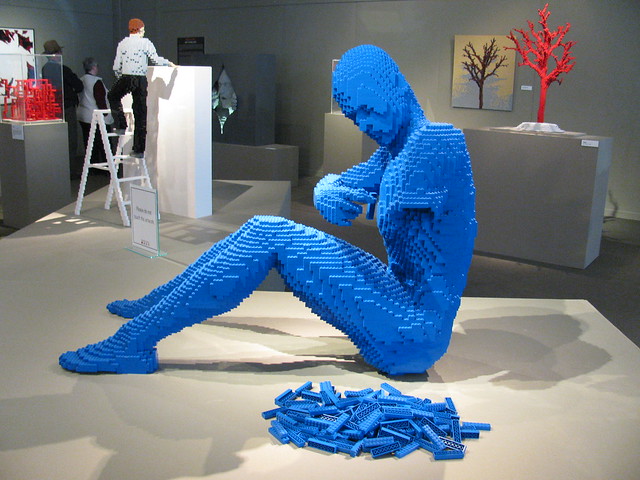
The addiction gypsies sneak up behind the focused, recovering addict. The Victoria & Albert Museum
You know that "follow the cup" game where you mentally track a concealed ball being shuffled around by a Fagin-ey hustler? And as you stand there tracking the ball, his two gypsy kids sneak up, saw the straps off your backpack, lift your wallet and run away laughing? And then the cups lift and no ball is in sight? Addiction is just like that.

A recovered alcoholic can spend years vigilantly guarding herself from booze, only to learn she has diabetes because of secret, frequent chocolate binges. A recovered heroin addict could dedicate his life to helping other users get clean, but live miserably tangled in an obsessive search for the perfect emotional and sexual mate. A recovered compulsive overeater may finally reach her goal weight, and celebrate by adding another grand to the fifty thousand in debt she's accumulated since getting abstinent. They could all focus so much on avoiding their addictive substance, they forget to pay attention to their addictive personalities and leave themselves open to being mugged of health and peace.

Too often addicts win recovery over their main addictions only to have their lives torn down again by new ones. It's comfortable, as an addict, to almost blame the substances for our addictions, as if the substances were containers of a disease that has nothing, really, to do with us. We want to think, "It's the alcohol, the drug, the sugar, the porn. It reacts in my body and mind. Without it, I'm fine." We think if we just avoid it, the rest of our lives will handle themselves. But this is a half-truth.  

Drugs, alcohol and addictive foods do stimulate neurochemicals that create addiction. Addictive behaviors, places and thoughts also activate neuropathways leading sometimes inevitably back to addiction. But many addicts also have the ability to look at our drugs and behaviors across a span of recovery -- knowing deeply that they cost us spouses, children, careers and health -- and still think, "That would be so good."

That's us. Not it.

Before we pick them up, addictive substances and behaviors have no magic magnetism. They are not the Borg, drawing us toward themselves with tractor beams against which all resistance is futile. They're a can. A bottle. A needle. A pill. A box. A bag. An image. A room. They're nothing. That's why they're so easy to swap for something else. 

What draws us into addiction, before we pick up, is what we're using it for. What emptiness it's filling. Ex: We have no self-esteem. Gambling's easy potential for victory was our drug. We gave it up, but still every time we lose a girlfriend we feel our self-worth grind into a fine powder. We can't live without her. Or: We never felt loved. Food comforted us like nothing else. We gave up binging, but still we obsess into tears over our pets and kids, sacrificing romantic, social and personal time to make sure they love us. We can't live without knowing they care.

We're dependent. We're hooked. We're still addicted, on new drugs now. The risk of this is, what happens to us when our new drugs leave? When she dumps you again? When your pet dies? When your kids go to college and forget you exist? Is it back to web poker and the junk food isle? Or is it endless revisions of your eHarmony profile, two new dogs and bi-monthly vacays to the kid's new school? And then what? What if eHarmony's a fail, you can't afford the vet bills and your kids tell you to get out of their life? Where are you in all of this?

Withdrawal. That's where. A hard, brutal one, fueled by every year, month, day and hour spent dependent on your drugs. Old and new.

Real self-care and recovery is a tough but worthy challenge to keep one eye on each side of the healing game. We have to drop our primary drugs, avoiding all their Fagin-ey tricks. We also have to watch ourselves, keeping our inner addictive urchins from sneaking up on our backs, and ideally parenting them with enough love and attention to reform them into abstentious little Oliver Twists.

If we don't do both, we risk someday really needing our recovery, reaching in to get it, and finding it gone.


Saturday, May 11, 2013

A diamond is a cracked stone.

IBC
Some days you feel broken. Your grey matter is hole-punched by hundreds of hits, your liver corroded by pools of booze, your ovaries incapacitated by too many years too thin. You feel wasted. Your present and future feel murdered by your past.

Are you over? Ruined? Not necessarily. Not with some minor readjustment.

"Minor" you say? Yeah, fine. My brain can't compute, so instead of going back to engineering I'll just sweep garbage shoots. My liver will burst, so rather than learning to run I'll lie floorwise waiting to die and studying the ceiling popcorn's Rorschach mystery. I'll never have kids, so I'll turn my apartment into a rescue farm and make all my dresses out of Purina sacks.

No, readjustment is not easy. But it is possible. And it leads to a more fulfilling life than despair.

Some things we can't change. Some wounds we can't heal. Some people we can't get back. No matter how sincerely you limber it up in yoga, nurture your organic turnips, cry it out in therapy, or make amends, sometimes Humpty Dumpty cannot be taped up. And refusing to accept it only creates new cracks.

Example: Your daughter won't see you. You could chase her down, visit her place of work, show up at her house unannounced. You could plead with her to see how sick you were, how you didn't mean anything you did. You could even fight, saying she's cruel. She rejects your amends, doesn't see her part. This probably won't go well.

Rather than snuggling your daughter into your warm embrace, you may just chase her deeper into shadow. What might be only a short time apart could become, because you fought it, one that may last years. Or forever. Your refusal to accept the loss magnified it. You created the pain you feared.

And this is basically how it goes.

You may have injured your brain. And you could fight it. You could go on interview after interview trying to prove it isn't so. And this may work out. If it does, wonderful. But it may not, and in the attempt you may erode your self-worth. Meanwhile you could have accepted your injury. Instead of fighting, you could have found new value. You might have helped somebody, coached kids after school, cared for an elderly friend. Your unexpected, unwanted life could have been more powerful than decades at a desk.

And so your liver's wounded. Again you could fight, keep on as if everything's unchanged. And this may prove a miracle. But it could also be your death. Alternatively, you might reap more years in admitting the disease, treatment and care, and meanwhile fill every hour of every day with joy as if each were a bubble about to burst so should be savored while it lingers. You could condense more life into a month than some might fit in decades.

And no, maybe, you can't have kids. And yes you can keep fighting, suffering through every test, believing it can be changed. And if this works, what a joy. But if you could accept your loss, you might find new purpose, and someone new, who needs you, to love and serve.

Your brokenness may be an opportunity for extraordinary meaning. Your dream of an unbroken life may awaken to a deeper life with infinitely more impact.


Friday, May 10, 2013

Slipping: There's no such thing as fairy dust.


We all know that place. Where we teeter on the edge of the decision. To cut ourselves. Call that dealer. Drink that beer. Go back to that website. Eat that cake. It would be like sliding off a cliff. All you'd do is drift one foot leftward, and you're falling all the way down.

And at the edge you believe you're weightless. You feel no gravity, see no horizon, no earth far below. No consequences. The choice seems so easy. Restraint is so hard.

When you're trying to stay clean it can feel like you have two warring selves. One you floats at this cliff in a bliss-bubble. The other you stands outside the bubble screaming and pounding on its crystal surface like you're Dustin Hoffman trying to stop the apocalypse. You want to scramble after whatever cord powers your suspension of sanity and yank it hard with a zeeoowww that would send your other self hurtling, informed, onto the safe high ground.

But you can't. You stay stuck outside, watching helplessly as the floating you drags you both over the edge, with a blissed-out smile on its face.

Weirdly this is a learned skill.

Pain rolled over us once. To survive, we may have whipped out a mental pop-up tent into which no pain or fear could enter. We hid inside. Left reality. Dissociated.

In Coping with Trauma-Related Dissociation, psychotherapists Suzette Boon, Kathy Steele and Onno van der Hart describe some physical aspects of this strange dissociation:
"There may be times when you feel spacey, foggy, or fuzzy. You may lose a firm connection with the present without being aware of it, and only realize afterwards that you were not very present. . . . You may have times when you are aware of your actions, as though you are watching yourself, but do not feel you have control over them."
They also describe dissociation's result from trauma:
"If we consider a continuum of trauma-related disorders, with post-traumatic stress disorder (PTSD) being the most basic, and developing in the aftermath of a traumatizing incident at any age, then complex dissociative disorders are a more pervasive developmental accommodation to trauma...."
Trauma hits. You're shocked and scared. You hide. You fly around like Peter Pan in Wendy's sheet-bunker for hours. You try to come out, but when you do you're hit with overwhelming fear, shame and anger. So you hide more. You fly around for months, maybe years. And every time you try to emerge, "smack!" Overwhelming pain. So you never come out. And in time your hideout expands like a glowy ethereal Blob, no longer shielding only trauma but blocking every unwanted feeling or thought.

Meanwhile all that fear, shame and anger sits alone on the outside, waiting for you to come back. But you never do. And while you expand your hideout, the earth between you cracks. And the crack spreads into a cliff-edged canyon, with your two selves stuck on opposite sides, miles apart.

And then one day you find yourself all grown up (or trying to be), with that fearful, shameful, angry self boasting a 12 Step program (or two or three), and fighting hard to stay clean. But frickin Peter Pan on the other side of the canyon won't stop leaning over the edge.

So what do you do? What Peter did. Sew your fearful, shameful, angry shadow back on. And refuse to fly away.

We'll check in with Coping with Trauma-Related Dissociation again to talk about how.


Thursday, May 9, 2013

Tuesday, May 7, 2013

When Buck Rogers misses the train. How to die addicted.

Thank the Lord Almighty for death. Nothing kicks addiction faster than killing yourself with it.

When we were addicted, we thought maybe we could manage it. We laid on our bathroom floor chatting with Puff the Magic Dragon about how to break the window bars off our parents' house to get more cash. We double-fisted cocktails while teetering off a Reno curb and calculating how long we could extend our trip and still make our Monday meeting. We chain-swallowed from a Costco flat while scrolling the web for work-from-home that could let us binge all day. But then, if we were lucky, management failed. Puff turned on us and magically made our frontal cranium seem to cave in. We were hit by a taxi. A diabetically withered artery behind our eye burst.

The lights went out. We saw God (or Not God). And then we awoke. Terrified.

Fear of death is one of the few fears stronger than fear of losing our drug. Hear some Word about this from addict-come-interventionist Kristina Wandzilak:


(Disclaimer: Just for right now we refrain from endorsing Wandzilak's Discovery Health channel show, Addicted, because, while tele-interventioning is sometimes handy scare therapy, other times it's sorta Tammy-Faye-with-all-the-eyelashes telecommunications that amounts to sick-sploitation. And we can't swear either way about Addicted. Maybe you can. Regardless, Wandzilak seems like a lovely lovely person, hence her inclusion in the blog.)

What Wandzilak says here about "jumping off points" is truth: addicts almost always must smash kinda face-first into their craggy, seashore-during-a-hurricane bottoms to recover. You basically have to realize you're going to die if you don't stop killing yourself. Genius, I know.

This brilliant insight doesn't always come chugging at us via literal, personal near-death experiences (with the wriggling lady tied down to the tracks, helplessly shrieking, "Help me Buck Rogers!"). Take the transfiguration of former heroin-chic model Jamie King, who got long-term heroin addiction recovery after her boyfriend had a drug-related death. It can come floating down on a sunny walk when we see an elderly couple and realize we may not live that long. Or when we lose our job and know we're headed for the street. Or even when we read some annoying blog that won't shut up about topics we hate because deep down inside, we're scared.

It only takes anything that convinces us there's more risk to keeping our drug than losing it. Lacking that epiphany, the best recovery tool is the grave.


Friday, May 3, 2013

Forgiveness for when you need it.

It's not your fault, your addiction. Yelling at your kids while high, selling yourself for hit money, the Ziplock taped to the underside of your desk, it's not your fault. Getting your kids drunk, cheating on your spouse in a haze, driving drunk everyday for a year, that wasn't your fault. When you ate food from from the garbage, stole money for a binge, smelt like vomit at school, you weren't guilty.

You are not bad.

And the consequences, the scars, disfigured face, liver disease and diabetes, your wounded children, estranged exes and disappointed parents. You did it. But you are not ruined.

Addiction is devouring. It is a mental superhighway with no exits and no road signs and on which you can travel two hundred miles before even realizing you got on.

Telling you yet again that addiction is a disease and all the subsequent blah-dee-blah about neurochemicals and reward patterns may not convince you you're forgiven, even though that blah-dee-blah is true.

And though you may still hope that all you really need is just to hear that one answer you want so much, to that one question you're afraid to ask of those people you love and hurt so badly, their forgiveness may not work either.

You have to forgive you. But this is crazy talk. Yeah, I'll just squeeze that muscle.

Take this super-hopeful video from the awesome YouTube SobrietyTelevision channel as inspiration:


You can decide not to hate you anymore. You can. It will be hard. It will often suck with discomfort. The whole process will often crap out. But you can. Under every tar asphalt of addiction, behind every heroin dealer, black-out drunk and obese sugar addict, is a just another soul. No monsters. Souls that are sick, and lost, not evil. This includes you (imagine a visual Smokey the Bear point here for emphasis).

Believing this may be too hard. And if it is, that's okay. Because even if you never feel it or believe it, underneath that disbelief will still be a soul that is not at fault, not bad, and never ruined.


Thursday, April 25, 2013

Nanobots are cursed.

Craigslist can be an excellent way to clean out your juju.

Have you ever had that moment when you walk into a place (ex., your cube, your bedroom, your parent's house, your car, etc.) and all of a sudden it seems as though a squadron of nicknack shaped nanobots are on a covert spec-op to suffocate you to death? 

"What's wrong?" your mother asks when you come for dinner. Oh nothing, just that lamp from alcoholic aunt Barbara. Just abusive Grampa's old watch. Only that picture of me and (insert name here) who got me drunk and dumped me after sleeping with my best friend. 

"Are you okay?" asks your well-meaning but gossipy cube-mate. No, sure, I'm fine. It's just this pile of papers from that manager who screams at me, this email from the stalker in the copycenter, these running shoes I left here to self-motivate but haven't used in seventeen months (but which still manage to smell). 

"Are you crazy?" you ask yourself when you walk in your front door, and your shoulders tense and you suddenly feel all barfy because your amygdala caught a glimpse of the mug you got on that binge trip to Tijuana eight years ago, or the blanket you used to cuddle in with your ex, or the coffee table you inherited from your pedophiliac uncle. 

Humans create sacred spaces. Usually our sacred spaces are filled with objects. Objects with comforting, inspiring significance. Take this dreamy pic I snagged while creeping some random person's public Pinterest


It's like living here would transform you into this super suave, Bond-ian person, who knows how to surf, and has an epic art collection, and is (still) a voracious bibliophile, and yet somehow makes orange shag carpet look like the most wondrous thing anyone could ever have. 

However, the weekly trauma of Hoarders also proves we're awesome at creating unsacred places. We build swarmy nests cobwebbed with reminders of regret, anger and pain -- Or so clogged that the voluminous passels are injuries all their own (these pictures give me the heebyjeebies).

We have this habit of thinking something like this: "Her feelings will be hurt if I toss that Lisa Frank sweater she gave me in seventh grade," or, "What if he finds out I sold the necklace," or "I bought that car at my high. It doesn't matter what I did with it." 

But it does matter. And it's her business if her feelings are hurt, not yours. And if you're scared of him, why would you keep something he gave you? 

For some reason it's a crazy-high hurtle to surmount, believing you have the right to control and build your own space. To make it someplace that's good to you, and good for you. To believe you're allowed to remove what hurts. 

This is especially hard if you've endured abuse. Because people who push you down make you believe you deserve it. They're just doing what's right. It's wrong of you to say no.

Life will never be painless. But we don't have to say, "Thanks, pain, that's so sweet," and then dust off pain's memento and put it on the mantlepiece. 

We do have the right to cleanse, and create. And it is worth the effort. When the nanobots don't attack, all of a sudden you may feel safe. Maybe even, sacred. 


~~~
Note: An awesome, hardly-used lamp and clock set is on sale on Craigslist now!


Wednesday, April 24, 2013

Climbing out of a dumpster. Tips and tricks.

Sitting on a bed in an inpatient clinic, watching an orange sun set through unbreakable plastic windows, listening to chair-throwing, guard-running, alarm-heralded patient rages through which your heavily sedated roommate sleeps dozily can give one an inflated sense of competence.

You can feel as though you've got it together, if, say, you can read a September 2006 copy of House Beautiful with fervently earnest interest while others around you stumble half-dosed with Zoloft looking for the nearest exit port, and others more weep over the grilled cheeses accidentally served for breakfast. You can think, "Yeah, I've got this mental health thing down."

But you don't really. And you know it, deep down, in the place that still hurts.

It's really scary to admit you're stuck, broken and need help. Especially when you've seen how impotent, shattered and helpless people can be (like, for instance, when they're being strapped to a padded bed because they felt too strongly about the distance of the nearest bathroom). You don't want to be like that, so you don't want to admit there's a part of you that kind of is.

But that's how you get stuck in dumpsters. Let me explain...

You can't climb out of the dumpster you're in if you won't admit you're in it (and, speaking as one who has many a time thrown out my substance-of-choice with zealous, recuperative dispatch only to find myself fifteen minutes later sifting through the drippy, pestilential dregs of said dumper to restore my forsaken Precious, this is truth). And even if you admit you need a way out, you won't get out easily if you refuse to admit you need help (you know, those moments when you think, "Sure, this coat hanger will make a super escape ladder." No, it really, really won't.)

Take this cutsey-poots video making the rounds on the interwebs as an illustration:


Who doesn't love bears, right? And what Gilgameshian ego can withstand the acidic burn of such vociferous cuteness long enough to reject grasping even one little stray bear-hair of wisdom from their awesomely MacGyvery escape? The mama bear sat around all night worrying and hoping they'd escape. And though they caterwauled and rambled around all night in their junk, they couldn't do it alone. Not until someone dropped in a ladder. And they used it. 

What's great about this is that the rescuers here just leave the ladder. They don't dive in and get mauled trying to lift the cubs out. They don't knock the dumpster over with their Dallasey truck, maybe freeing but probably disjointing some wee baby bear parts. And they don't call in Animal Rescue to have everyone tranqued and drug away dreaming of pastrami wrappers. They just drop the ladder. The bears figure the rest out themselves. 

That's what it's like, recovery. You need a ladder. And, often, you need someone to drop one. But then, the rest is up to you. 


Monday, April 22, 2013

Infinite brain candy.

So Mondays right? Blech. Who's tired? This one, right here, for sure.

If you're at all like me (and you know you are; don't be frightened), some days suck more than others. You know the days I'm talking about. The ones where you want to curl up like a snail in your shell, shriveling oozily into warm dreams of rotting fruit (that's what snails eat), and hoping that if your fragile, snoozy carapace is crushed by busy life as it trundles over you, at least you'll dream right through it.

That's Mondays for some, I'm guessing.

Life's hard when you're recovering. When you struggle to cope with disease, addiction, trauma, loss and pain, your insides can feel like they're cracking open, all the time, everywhere. The base of your skull can throb like a pulsar. Your trapezius muscles can seem as if they're strangling you to death. And when this break, the brokenness inside you, bleeds out like this, it can take every ounce of will and courage just to breathe spasmodically yet consistently through the shuddering breach.

And you're supposed be someplace at 9 a.m.? With a suit on? And with prepared thoughts, about things no less, things irrelevant to anything seemingly consequent, such as "Where the hockey-puck is my Prozac?" and "Why the fudge-ripple-in-a-can must I jog down the block just to smoke?"

On days like this I cling with desperation to the wisdom of "Infinity." And no this is not some new yogi mantra... though it may already be an old one. This thought-provoking painting by Jerod Kytah is a good illustration:

Infinity, watercolor, by Jerod Kytah
I like this painting because it literally shows what is meant by "the wisdom of infinity" (I like to imagine this echoing in the voice of James Earl Jones). In each of us there is a part in the shadow and a part in the light. One part hurts, really bad. And another is okay, knowing everything will be all right.

Living successfully in recovery requires cycling through these parts. Like walking. One minute you're on your left foot. Next you're on your right. You don't get very far hopping along on one foot only. If you try, you could get numb-footed, half-atrophied and, eventually, bloody-nosed.

The same goes with life. You can't thrive only in the part that's "okay," tight-fistedly rejecting any hint of the more shadowy part (or, at best, assuming the shadowier part can fix itself just fine without any uncomfortable assistance from you). Nor can you thrive only in the dark. Perpetual, purgative catharsis is no good (believe me, I've tried). Just give pulling on flowers a whirl. No matter how well-intentioned your yanking, it aint going to make them bloom.

This is where brain candy comes in (mmm yum for serotonin). We have to wash our faces, do our jobs and meet the world with some semblance of self-sustainability. There's no getting around it, unless we are blessed with a complete, financial support system. On days when our spines crack with grief and woe, our shadowier sides have hard times of this. They need help -- help that does not come in the form of self-harm (a.k.a., insert your addiction of choice here). And what better help is there I ask you than web memes that make you smile?

Buzzfeed has this good one, but it's old. So queue this adorable article I StumbledUpon this morning, listing children's definitions of love. The last is my favorite:

Author and lecturer Leo Buscaglia once talked about a contest he was asked to judge. The purpose of the contest was to find the most caring child. 

The winner was a four year old child whose next door neighbor was an elderly gentleman who had recently lost his wife. 

Upon seeing the man cry, the little boy went into the old gentleman's yard, climbed onto his lap, and just sat there. 

When his Mother asked what he had said to the neighbor, the little boy said, 

"Nothing, I just helped him cry."